5G Home Internet vs Fiber: Which Is Better Today?
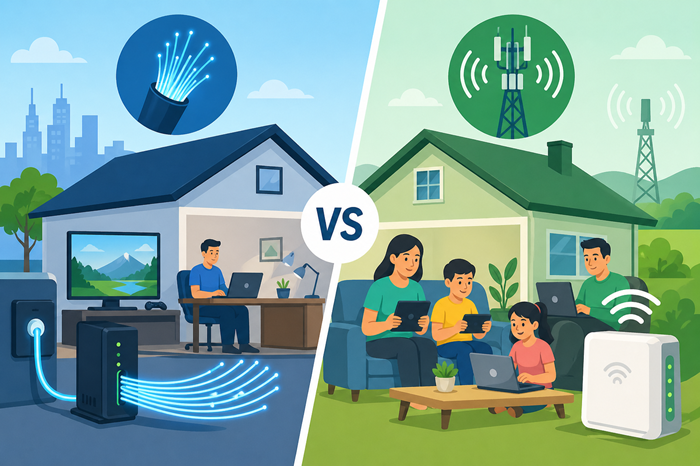
Choosing the right internet connection for your family is no longer just about speed. Streaming, remote work, gaming, video calls, smart home devices, and online learning all compete for bandwidth every day. That’s why many households are comparing traditional fiber connections with newer wireless options powered by 5G networks.
The big question is simple: can wireless home internet truly replace fiber for a busy household?
In this guide, we’ll compare performance, reliability, pricing, setup, and everyday usability so you can decide whether a wireless solution from major carriers is enough for your needs or if fiber still holds the advantage.
Understanding the Difference Between Fiber and Wireless Internet
Before comparing speeds and reliability, it helps to understand how these services work.
Fiber internet delivers data through underground fiber-optic cables. It’s known for ultra-fast speeds, low latency, and stable performance during peak hours.
Wireless home internet uses cellular towers instead of physical cables. A gateway device inside your home connects to nearby towers and distributes internet through Wi-Fi.
This newer approach has become popular because it avoids installation delays and often comes with lower upfront costs.
Why Families Are Considering Wireless Home Internet
For years, fiber was considered the gold standard for home connectivity. That hasn’t changed entirely, but modern wireless technology has improved significantly.
Families are switching for several reasons:
Easier installation
No technician appointments
Lower monthly pricing
Flexible contracts
Better rural availability
Sufficient speeds for average households
The convenience factor alone makes wireless internet appealing for renters, students, and families who move frequently.
Speed Comparison: Is Fiber Still Faster?
In raw performance, fiber still wins.
Fiber connections can deliver symmetrical upload and download speeds, often reaching 1 Gbps or more. That means large uploads, cloud backups, and video conferencing stay consistently smooth even when multiple devices are active.
Wireless home internet has improved dramatically, but speeds can fluctuate depending on tower congestion, distance, and local network traffic.
That said, average families may not actually notice the difference during normal use.
Streaming Netflix in 4K, joining Zoom calls, browsing social media, and gaming casually usually work well on modern wireless plans.
The real difference becomes noticeable in households with:
Heavy online gaming
Large file transfers
Multiple simultaneous 4K streams
Smart homes with dozens of connected devices
Content creators uploading large media files
How Reliable Is Wireless Internet for Daily Use?
Reliability depends heavily on location.
Fiber connections remain consistent because they use direct physical infrastructure. Weather and network congestion rarely affect performance.
Wireless internet depends on cellular signal quality. Speeds can vary during busy evening hours when towers are overloaded.
Still, carriers have improved network stability substantially over the last few years. For many suburban and urban households, service interruptions are uncommon.
If your household primarily streams content, attends virtual meetings, and browses the web, reliability is often more than adequate.
Setup and Installation Experience
One area where wireless internet clearly wins is simplicity.
Fiber installation usually requires:
Technician appointments
Drilling or cable routing
Waiting periods
Equipment setup
Wireless services are typically plug-and-play. You receive a gateway device, position it near a window, and connect within minutes.
If you’re considering carrier-based home internet, this helpful guide on how to setup T-Mobile home internet explains how quickly most households can get connected without professional installation.
For busy families, avoiding installation headaches can be a major advantage.
Performance for Streaming and Entertainment
Modern households rely heavily on streaming platforms.
Most wireless plans can comfortably support:
HD and 4K streaming
Smart TVs
Music streaming
Video calls
Online browsing
Problems usually arise only when many devices simultaneously consume high bandwidth.
Fiber offers more headroom, which matters for large families with constant high-demand usage.
However, many households overestimate how much speed they truly need. Even moderate-speed wireless plans can support several streams and devices without issues.
Gaming and Latency Differences
Gamers should pay close attention to latency rather than just download speed.
Fiber connections usually offer lower ping times, creating smoother online gaming experiences with less lag.
Wireless internet can still support gaming, but latency may fluctuate more frequently depending on tower congestion and signal quality.
Casual gamers will likely be satisfied. Competitive gamers, streamers, and esports players may still prefer fiber.
Rural Availability and Accessibility
One of the biggest advantages of wireless internet is expanded coverage.
Fiber infrastructure is expensive to build, which means many rural communities still lack access.
Wireless home internet fills that gap by using existing cellular networks to reach underserved areas.
For families living outside major cities, wireless options may provide far better speeds than outdated DSL or satellite services.
Comparing Monthly Costs
Pricing is another major factor.
Fiber plans often include:
Higher installation costs
Equipment fees
Promotional pricing that increases later
Wireless internet providers typically focus on:
Simpler billing
No annual contracts
Lower startup costs
Included equipment
Budget-conscious households often find wireless internet more attractive financially.
Still, fiber users may feel the extra cost is worthwhile for guaranteed performance and stability.
How Household Size Affects Your Choice
Not every family uses the internet the same way.
Small Households
One or two people using internet for browsing, streaming, and remote work may find wireless internet more than sufficient.
Medium-Sized Families
Families with children streaming videos, attending online classes, and using gaming consoles simultaneously should evaluate average usage carefully.
Large Connected Homes
Homes packed with smart devices, gaming systems, security cameras, and heavy streaming users will benefit more from fiber’s stability and higher capacity.
The Growth of Wireless Technology
Wireless home internet continues improving rapidly.
Carriers are expanding coverage areas, upgrading towers, and increasing capacity nationwide. Performance today is dramatically better than it was only a few years ago.
Consumers researching verizon updates often notice how aggressively providers continue investing in network expansion and speed improvements.
As infrastructure evolves, the performance gap between fiber and wireless may continue narrowing for average users.
How to Improve Wireless Internet Performance
Placement matters significantly with wireless gateways.
Small adjustments can improve speed and stability noticeably.
Helpful optimization strategies include:
Positioning the gateway near windows
Avoiding thick walls
Keeping devices elevated
Reducing interference from electronics
Updating router firmware regularly
If you already use wireless home internet, these practical tips to boost internet speed can help improve coverage and consistency throughout your home.
Carrier Comparison: Which One Performs Better?
Coverage quality depends on your area, but major providers continue competing aggressively.
Some households prefer plans with lower monthly costs, while others prioritize reliability and speed consistency.
When comparing available options, many users review T-Mobile plans to evaluate pricing flexibility and setup simplicity before making a decision.
Others compare network expansion and regional performance from providers offering wireless alternatives to traditional broadband.
If you are exploring nationwide availability and performance comparisons, reviewing options like verizon interenet services can help you determine which provider has stronger coverage in your location.
Is Wireless Internet Good Enough for Remote Work?
For most professionals, yes.
Video meetings, cloud collaboration, emails, and web-based workflows typically run smoothly on modern wireless networks.
Problems may appear when:
Uploading massive files regularly
Running enterprise VPNs
Managing multiple simultaneous video conferences
Operating from weak signal areas
Remote workers handling demanding workloads may still benefit from fiber’s consistency.
Security and Privacy Considerations
Both fiber and wireless services offer secure encrypted connections when configured properly.
The bigger concern is usually home network security rather than connection type.
Families should:
Use strong Wi-Fi passwords
Enable WPA3 encryption if available
Update router firmware
Avoid default login credentials
A secure home network matters regardless of your provider.
So, Is Wireless Home Internet Fast Enough?
For many families, absolutely.
If your household mainly:
Streams movies
Uses social media
Works remotely
Attends online classes
Browses the web
Plays casual games
Then modern wireless internet can perform surprisingly well.
Fiber still remains the better option for power users who demand maximum consistency and speed. But for average households, the difference is becoming smaller every year.
Ultimately, the best choice depends on:
Your location
Household size
Budget
Online habits
Available providers
Final Thoughts
The internet landscape is changing quickly. Fiber still leads in pure performance, but wireless technology has matured enough to become a legitimate alternative for millions of households.
Families no longer need to assume they must pay premium fiber pricing to enjoy reliable home connectivity. As more households compare the best internet providers, wireless home internet continues proving itself as a practical and affordable option for everyday use.
The smartest approach is to evaluate your real-world internet usage instead of chasing the highest advertised speeds.
If your household values affordability, convenience, and flexible installation, wireless internet may be more than enough. If you rely heavily on high-performance online activities every day, fiber still offers unmatched stability.
The good news is that consumers now have more choices than ever before.
FAQs
1). Is fiber internet faster than wireless home internet?
A: Yes, fiber typically offers faster and more consistent speeds.
2). Can wireless home internet handle multiple devices?
A: Yes, most modern plans support several connected devices comfortably.
3). Does weather affect wireless home internet?
A: Severe weather can occasionally impact wireless signal performance.
4). Is wireless internet good for streaming?
A: Yes, it works well for HD and 4K streaming in most households.
5). Which is easier to install: fiber or wireless internet?
A: Wireless internet is usually much faster and easier to set up.
Related Posts
 cheap internet deals
cheap internet plans
cheap internet deals
cheap internet plans
Why Utah and the Mountain West Attract Remote Workers
Discover why Utah and the Mountain West are attracting remote workers with affordable living, reliable internet, lower utility costs, and growth.
 Technology
Why Your Internet Keeps Disconnecting and How to Fix It
Learn why your internet keeps disconnecting and discover proven fixes for router issues, Wi-Fi interference, faulty cables, and network instability.
 Broadband Deals
cheap internet deals
Subscription
Broadband Deals
cheap internet deals
Subscription
Affordable Internet and TV Bundles for the 2026 World Cup
Compare affordable internet and TV bundles for sports fans and enjoy reliable coverage of the 2026 World Cup without overspending.
 Internet Bundles
How to Detect ISP Throttling and Improve Your Internet Speed
Learn how to detect ISP throttling, identify common warning signs, test your connection, and improve internet speed for streaming, gaming, and work.
 cheap internet deals
cheap internet plans
cheap internet offers
cheap internet deals
cheap internet plans
cheap internet offers
Which ISP Offers the Best Long-Term Price Stability?
Compare ISPs with the most stable long-term pricing. Learn how to avoid bill increases, evaluate plans, and choose affordable internet service.