Is Bundling Internet, TV, and Phone Really Cheaper?
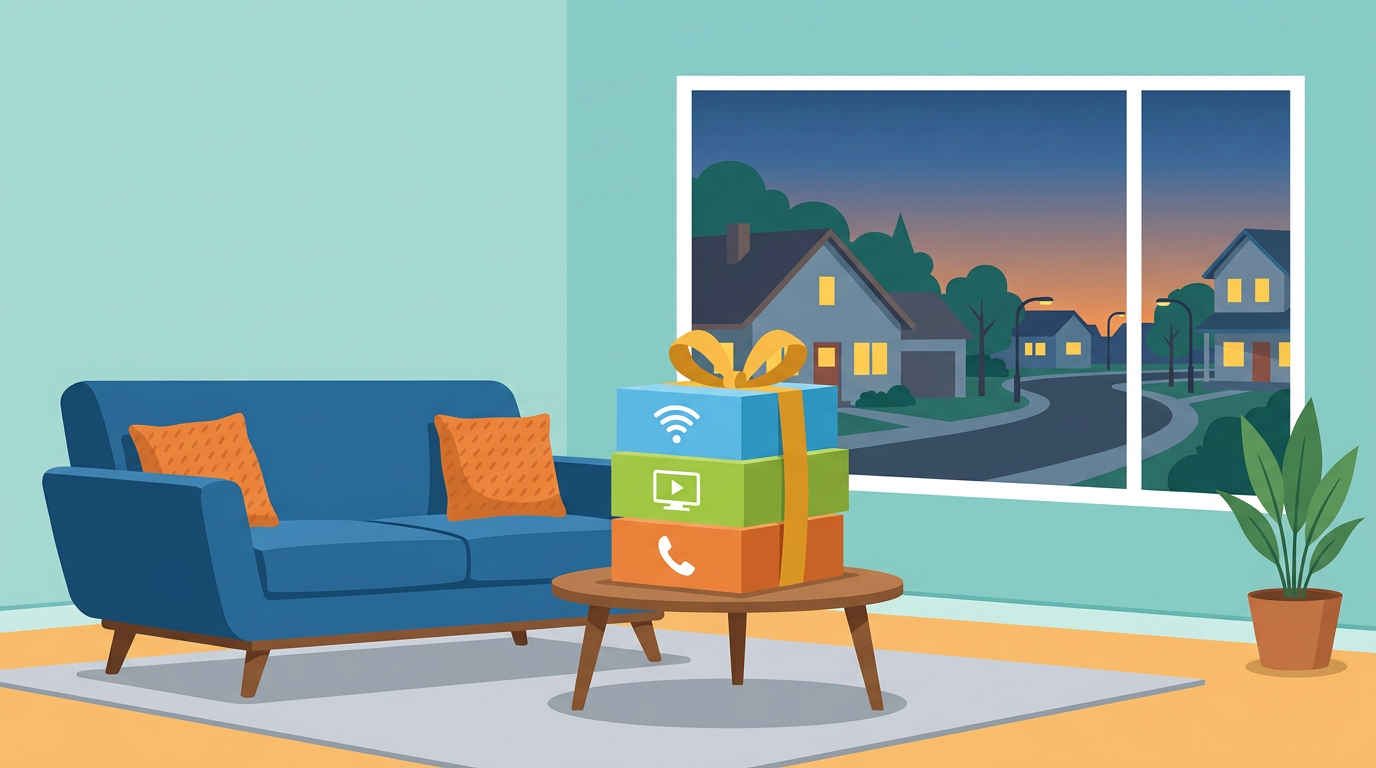
If you’re staring down a stack of bills and wondering whether bundling your internet, TV, and phone services could lighten the load, you’re not alone. Plenty of folks wrestle with this decision every month. The pitch sounds simple: combine your services with one provider and watch the savings roll in. But does it actually deliver? In this post, we’ll break it down step by step, looking at real costs, hidden catches, and when it makes sense to bundle—or skip it altogether.
We’ll dig into the numbers, compare bundling to standalone plans, and help you figure out the best move for your household. By the end, you’ll have the clarity to decide if bundling your internet, TV, and phone is truly cheaper or just a clever sales trick.
What Does Bundling Internet, TV, and Phone Mean?
Bundling means signing up for multiple services—like high-speed internet, cable TV, and home phone—from the same provider under one account. Think of it as a combo meal at your favorite fast-food spot: you pay less per item when you get them together.
Providers like AT&T, Spectrum, or Verizon push these packages hard. They often advertise discounts of 20-30% off your total bill. But the real question is whether that savings holds up over time.
It’s not just about the initial price tag. Bundles can simplify billing and tech support, too. One login, one bill, one customer service number. That convenience appeals to busy families or anyone tired of juggling multiple apps and accounts.
The Upfront Appeal: How Bundles Promise Savings
Let’s talk numbers. Standalone services might cost you $70 for internet, $80 for TV, and $30 for phone—totaling $180 monthly. A bundle from the same provider could drop that to $140, saving $40 right off the bat.
These deals shine brightest for households using all three services. If you’re streaming Netflix anyway but still paying for cable, bundling might consolidate everything without losing features.
Promotions sweeten the pot. New customers often snag free installation or the first few months at a steep discount. It’s a smart hook for providers aiming to lock in long-term subscribers.
But here’s where it gets interesting—those savings aren’t set in stone. We’ll explore why next.
Breaking Down the Real Costs of Standalone Services
Before jumping into bundles, consider going solo. High-speed internet alone averages $60-100 per month, depending on speed and location. Fiber plans hit $80+, while cable options start lower.
TV services vary wildly. Cable packages run $50-120, packed with 100+ channels. Streaming alternatives like YouTube TV or Hulu + Live cost $70-80 but skip the long-term contract.
Home phone? VoIP lines are cheap at $10-20, but landlines from traditional providers push $30+.
Add them up, and you’re looking at $140-250 monthly without bundling. Factor in taxes and fees—another 10-20%—and it climbs fast.
The flexibility is the win here. Mix and match providers for the best deals, like a budget internet plan paired with Sling TV.
Bundle Savings: The Math That Matters
Now, the bundle breakdown. Most providers offer tiered packages: basic (200Mbps internet, 75 channels, unlimited calls) at $100-130; premium (1Gbps, 200+ channels) at $150-200.
Savings kick in around month three, post-promo. A typical 25% bundle discount shaves $30-50 off combined standalone prices. Over a year, that’s $360-600 back in your pocket.
We crunched sample data from major providers:
| Service Type | Standalone Average | Bundled Average | Monthly Savings |
|---|---|---|---|
| Internet Only | $80 | Included | N/A |
| TV Only | $90 | Included | N/A |
| Phone Only | $25 | Included | N/A |
| Total | $195 | $150 | $45 |
This table shows a solid win for heavy users. But light streamers might not see the same value.
Transitioning smoothly, let’s peek behind the curtain at those fine-print fees that can eat into your discount.
Hidden Fees and Contract Traps in Bundles
Promos fade, and reality hits. Introductory rates last 12 months, then jump 20-30%. That $140 bundle? It could climb to $170 without warning.
Equipment rental adds $10-20 monthly for modems, routers, and DVRs. Taxes, regional fees, and broadcast surcharges tack on $15-25.
Contracts lock you in for 1-2 years. Early termination fees? Up to $240. Miss a payment, and they unbundle services, spiking your bill.
Not all bundles are equal. Some skimp on internet speeds or channel lineups to hit the low price. Always read the terms.
Speaking of speeds, if you’re eyeing faster options, check out our take on 4G vs 5G vs 6G simple comparison to see how mobile tech stacks up against home bundles.
When Bundling Makes Perfect Sense
Bundles crush it for certain setups. Big families glued to live sports or news? The channel variety and multi-room DVR justify the cost.
Rural areas with limited options benefit too. One provider might be your only game in town for reliable internet and TV.
If you value simplicity, bundles reduce hassle. Single app for streaming, one bill to pay, unified support.
Long-term loyalty pays off. Stick around two years, and loyalty discounts can extend savings.
Pro tip: Negotiate at renewal time. Mention competitor offers, and they often match or beat them.
When to Skip Bundling and Go À La Carte
Not every home needs the full package. Cord-cutters streaming on smart TVs save big without TV bundles—$70-100 less monthly.
If you barely use phone service, drop it. Apps like Google Voice handle calls for free over internet.
High-data users might prefer fiber and 5G hybrids over traditional cable bundles for speed without the extras.
Test the waters with month-to-month plans. Many providers let you bundle temporarily, then peel off services.
Budget hawks should compare via a quick search internet plans tool to spot standalone steals.
Comparing Providers: Who Offers the Best Bundles?
AT&T’s Internet Air + TV bundles start at $145 with 300Mbps and 65+ channels. Solid for urban dwellers.
Spectrum shines in coverage, with $130 packages including 125 channels and no contract.
Verizon Fios bundles fiber speeds up to 2Gbps with YouTube TV integration for $140.
Xfinity pushes aggressive promos: $120 for 300Mbps, 125 channels, and voice.
Regional players like WOW or Frontier undercut nationals, often under $110.
Shop smart—use coverage checkers and read reviews.
Real-Life Examples: Bundle Wins and Fails
Take Sarah, a suburban mom. Standalone: $90 internet, $100 DirecTV, $20 phone = $210. Bundled with Xfinity: $155. Saved $660 yearly, plus easier management.
Contrast with Mike, a remote worker. He ditched TV bundle for $60 fiber internet + $35 mobile hotspot. Total $95—half his old bundle.
These stories highlight personalization. Your mileage varies by usage and location.
For hotspot fans, our guide on choosing the right 5G hotspot device breaks down alternatives to fixed bundles.
Long-Term Strategy: Maximize Savings Year After Year
Review bills quarterly. Promo ending? Call to extend or switch.
Layer in streaming services strategically. Bundle includes basic cable? Add Netflix separately.
Consider overages. Unlimited data in bundles prevents surprise charges.
Future-proof with gigabit speeds. As 8K streaming rises, bundles with upgrade paths win.
FAQ
Is bundling always cheaper than separate services?
Not always—it depends on your usage. Heavy TV viewers save big, but streamers often do better standalone. Compare your current bills to bundled quotes for clarity.
What are typical bundle discounts?
Expect 20-30% off combined prices, or $30-50 monthly. Promos boost this initially, but watch for post-promo hikes.
Can I bundle without a long contract?
Yes, some providers like Spectrum offer no-contract bundles. Others require 12-24 months—check terms upfront.
Do bundles include equipment?
Usually yes, but rentals add $10-20/month. Buy your own modem/router to cut costs long-term.
How do I switch to a bundle?
Start with a provider search in your area, get quotes, then schedule install. Port your number for phone to avoid downtime.
Related Posts
 cheap internet deals
cheap internet plans
cheap internet deals
cheap internet plans
Why Utah and the Mountain West Attract Remote Workers
Discover why Utah and the Mountain West are attracting remote workers with affordable living, reliable internet, lower utility costs, and growth.
 Technology
Why Your Internet Keeps Disconnecting and How to Fix It
Learn why your internet keeps disconnecting and discover proven fixes for router issues, Wi-Fi interference, faulty cables, and network instability.
 Broadband Deals
cheap internet deals
Subscription
Broadband Deals
cheap internet deals
Subscription
Affordable Internet and TV Bundles for the 2026 World Cup
Compare affordable internet and TV bundles for sports fans and enjoy reliable coverage of the 2026 World Cup without overspending.
 Internet Bundles
How to Detect ISP Throttling and Improve Your Internet Speed
Learn how to detect ISP throttling, identify common warning signs, test your connection, and improve internet speed for streaming, gaming, and work.
 cheap internet deals
cheap internet plans
cheap internet offers
cheap internet deals
cheap internet plans
cheap internet offers
Which ISP Offers the Best Long-Term Price Stability?
Compare ISPs with the most stable long-term pricing. Learn how to avoid bill increases, evaluate plans, and choose affordable internet service.