How AI and Smart Homes Are Reshaping Internet Needs
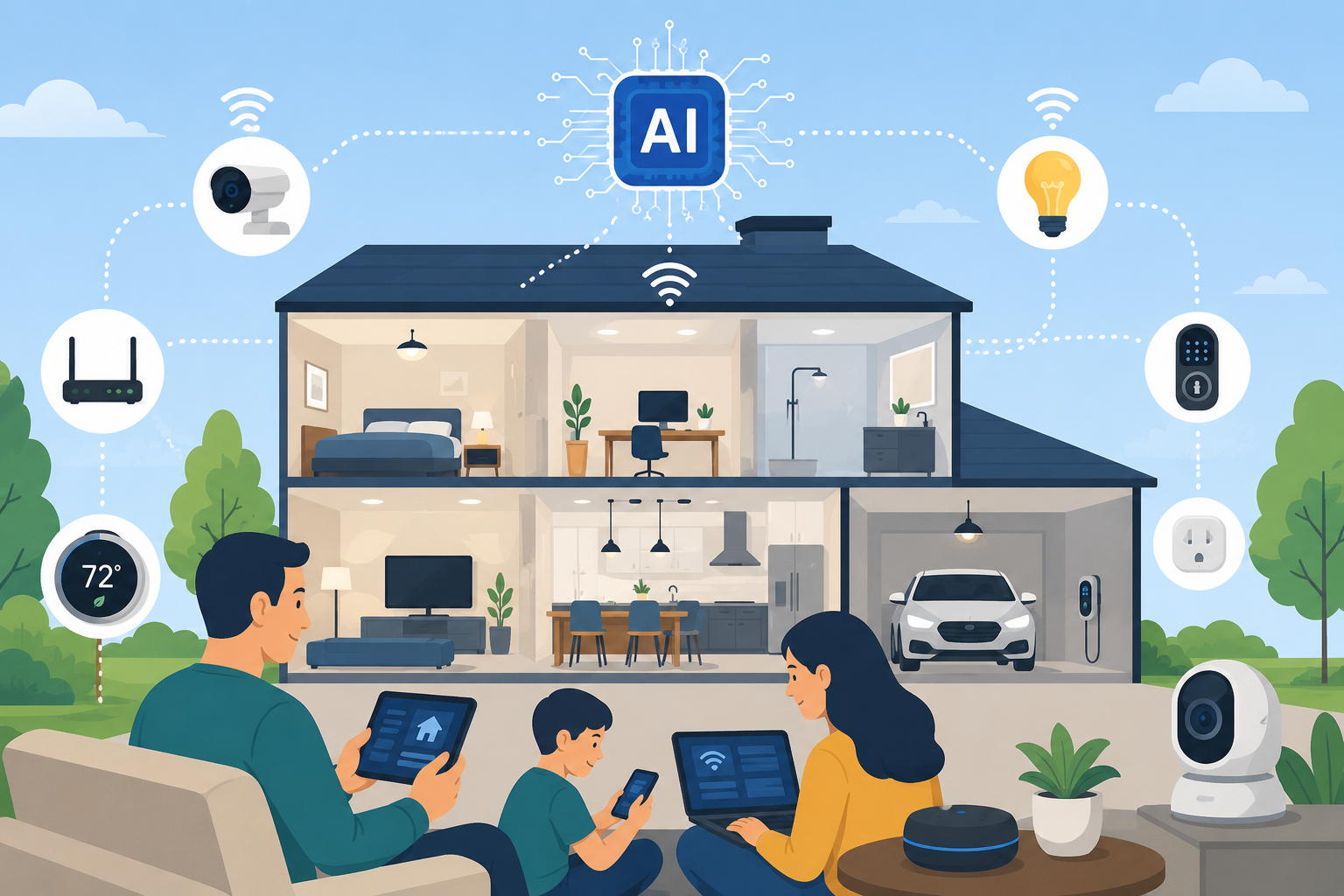
Smart homes and AI-powered devices are changing how Americans use the internet every day. A few years ago, most households only needed enough bandwidth for streaming movies, browsing websites, and occasional video calls. Today, homes are becoming connected ecosystems filled with AI assistants, smart cameras, cloud-based automation systems, remote work tools, gaming devices, and dozens of internet-connected appliances running simultaneously.
As internet usage patterns evolve, many homeowners are starting to notice that older internet plans no longer feel as reliable as they once did. Devices compete for bandwidth constantly, cloud processing happens in real time, and AI applications depend heavily on stable low-latency connections.
The rise of AI and smart home technology is no longer a future trend. It is actively reshaping internet speed demands across the United States, influencing how internet providers build networks and how consumers choose broadband plans.
Why Internet Usage Has Changed So Much
Internet usage today looks very different from what it did even five years ago. Households now rely on internet connections for nearly every part of daily life.
Video streaming alone consumes massive bandwidth, especially with 4K and HDR content becoming standard. Add smart security systems, voice assistants, cloud gaming, remote work platforms, and AI-powered automation, and the average home internet load increases dramatically.
Many households also run dozens of connected devices at the same time, including:
Smart TVs
Security cameras
Smart thermostats
Voice assistants
Smart refrigerators
Gaming consoles
Tablets and smartphones
Robot vacuums
Cloud-connected appliances
AI-powered home systems
This growing device ecosystem explains why many consumers experience congestion even when they technically subscribe to “fast” internet plans.
In many cases, connection slowdowns happen because the total demand inside the home has changed significantly. Similar network congestion patterns why your internet speed test doesn’t match your plan.
AI Is Increasing Real-Time Internet Activity
Artificial intelligence tools are becoming part of everyday routines. AI-powered search engines, smart assistants, automated scheduling tools, image generators, cloud-based analytics platforms, and AI customer support systems all depend on fast and stable internet connectivity.
Unlike traditional web browsing, many AI systems process information continuously in the cloud. This creates heavier real-time data usage compared to older internet activities.
AI Assistants Are Always Connected
Voice assistants and AI home hubs remain connected 24/7. They constantly sync updates, process voice commands, monitor automation routines, and communicate with cloud servers.
Even though individual requests may seem small, the continuous communication between devices and cloud systems adds ongoing internet demand throughout the day.
Cloud AI Processing Requires Stable Upload Speeds
Many AI systems rely heavily on upload bandwidth, not just downloads. Smart cameras upload footage to cloud storage, AI meeting tools sync recordings online, and smart home sensors continuously transmit data.
This is one reason why upload speed is becoming more important for modern households.
Fiber internet providers have gained popularity partly because symmetrical upload and download speeds better support AI-driven workloads.
Smart Homes Are Adding More Connected Devices
The average smart home now contains significantly more internet-connected devices than traditional households did in the past.
Some homes easily exceed 30 to 50 connected devices operating simultaneously.
Smart Security Systems Consume Constant Bandwidth
Security cameras are among the biggest bandwidth consumers inside modern homes.
High-definition cameras stream footage continuously to cloud storage platforms. Motion detection systems, AI facial recognition features, and remote monitoring apps increase network activity even further.
Multiple cameras running in 2K or 4K resolution can place a heavy load on slower internet plans.
Smart Appliances Communicate Continuously
Modern appliances now connect to mobile apps and cloud services regularly.
Smart refrigerators, washing machines, ovens, thermostats, and lighting systems all send and receive data throughout the day. Individually, the bandwidth usage may appear minimal, but together these devices create constant background traffic.
Smart Entertainment Is More Demanding
Streaming quality expectations have also increased dramatically.
Many households now stream simultaneously across multiple TVs, tablets, and gaming systems while running smart home devices in the background.
As entertainment platforms continue pushing higher-quality video formats, internet demand naturally rises alongside them.
Households experiencing buffering, lag, or inconsistent streaming performance often notice improvements after reviewing common causes of slow internet and ways to improve connection stability.
Remote Work and AI Collaboration Tools Are Raising Speed Expectations
Remote work permanently changed internet usage patterns in American households.
Video conferencing, cloud collaboration platforms, virtual desktops, and AI productivity tools now operate simultaneously during the workday.
Video Calls Require Stable Connections
Modern video meetings consume far more bandwidth than traditional phone calls.
High-definition conferencing platforms rely heavily on stable upload speeds and low latency. When multiple household members attend meetings simultaneously, internet performance can decline quickly on lower-tier plans.
AI Productivity Platforms Add Background Usage
AI-powered business tools often process data continuously in the cloud.
Automated transcription tools, AI meeting summaries, smart scheduling platforms, and collaborative editing systems all contribute to increased internet demand throughout the day.
Many professionals working remotely are now reevaluating whether their existing plans truly support modern usage needs. Households balancing remote work, streaming, and AI-powered devices often compare their setup against realistic expectations in internet speed requirements for work-from-home and 4K streaming.
The Growth of 5G Home Internet and AI Connectivity
5G home internet services are becoming increasingly popular across the United States.
Wireless broadband options now compete directly with cable and fiber providers in many markets, especially in suburban and rural areas.
AI Devices Depend on Low Latency
Latency matters more than ever in AI-powered environments.
Smart automation systems, AI assistants, gaming platforms, and cloud-based services all perform better when network response times remain low.
5G networks continue improving in this area, making wireless internet more appealing for connected households.
Smart Homes Push Wireless Networks Harder
As device counts increase, home Wi-Fi performance becomes more important than raw internet speed alone.
AI systems communicate constantly with mobile apps, cloud platforms, and connected devices throughout the home.
Many users upgrading to 5G internet services eventually discover that router placement, interference, and network congestion still affect overall performance.
Why Upload Speeds Matter More Than Before
For years, internet plans focused mostly on download speeds because consumers primarily streamed content and browsed websites.
That has changed significantly.
Modern internet usage now depends heavily on uploads because households constantly send information to the cloud.
Examples include:
Smart camera uploads
Cloud backups
AI voice processing
Remote work collaboration
Live streaming
Smart device synchronization
Online gaming communication
AI-generated media uploads
This shift explains why many households feel frustrated even when download speeds appear fast on paper.
Internet providers increasingly recognize that upload performance now plays a major role in customer satisfaction.
AI Is Accelerating the Need for Faster Home Networks
Artificial intelligence technology continues evolving rapidly.
Future smart homes will likely rely even more heavily on cloud processing, automation systems, predictive AI, and real-time data analysis.
Some emerging trends already shaping internet demand include:
AI-Powered Energy Management
Smart homes now use AI to optimize energy usage, monitor appliances, and automate electricity consumption based on household patterns.
These systems continuously process data in the background.
AI Health Monitoring Devices
Connected health devices and wearable systems increasingly rely on real-time data syncing and cloud-based analysis.
This creates another layer of continuous internet activity inside households.
AI Home Automation Ecosystems
Future homes may integrate centralized AI systems capable of managing lighting, climate control, security, appliances, entertainment, and scheduling automatically.
These systems require stable, uninterrupted connectivity to function properly.
Internet Providers Are Responding to Changing Demands
Internet providers are rapidly adapting to these new usage patterns.
Across the U.S., providers are expanding:
Fiber infrastructure
Multi-gig internet plans
Wi-Fi 7 support
Mesh networking systems
5G broadband availability
Cloud optimization technologies
Consumers are also becoming more aware of the difference between advertised speeds and real-world performance.
As connected homes become more common, internet reliability now matters just as much as raw speed numbers.
Find Internet Plans Built for Modern Smart Homes
Modern households rely on stable internet connections more than ever before. AI-powered devices, streaming platforms, smart security systems, and connected appliances all place increasing demands on home networks.
Find Internet Plans That Match Today’s Connected Homes
Why Internet Speed Testing Is Becoming More Important
As homes become more connected, internet speed testing is becoming a regular habit for many consumers.
Performance can fluctuate depending on:
Device congestion
Wi-Fi interference
Peak usage hours
Router limitations
Network latency
ISP congestion
Speed testing helps homeowners understand whether their connection still matches their actual daily usage.
The Future of Internet Usage Is Already Here
AI and smart home technology are transforming how Americans use the internet at an incredibly fast pace.
What once felt like optional convenience features are quickly becoming part of everyday life. Smart devices now communicate constantly, AI platforms rely on cloud processing, and connected households demand stronger, more stable broadband performance than ever before.
As internet usage continues evolving, speed expectations will likely keep rising alongside advancements in automation, cloud computing, and AI-powered services.
The modern home is no longer simply connected to the internet. In many ways, it now runs on it.
FAQ
Why do smart homes require faster internet?
Smart homes use multiple connected devices simultaneously, including cameras, voice assistants, streaming devices, and cloud-based automation systems. These devices constantly communicate online, increasing bandwidth demand.
Does AI use a lot of internet bandwidth?
Many AI tools rely on cloud processing, real-time syncing, and continuous data transfers. AI-powered systems can increase both download and upload usage significantly.
Why are upload speeds becoming more important?
Modern internet activity involves uploading data regularly through video calls, cloud backups, security cameras, AI processing, and remote work platforms. Upload performance now affects everyday connectivity more than before.
How many devices can a home internet plan handle?
The answer depends on the speed tier, router quality, and internet type. Many modern households operate 20–50 connected devices simultaneously.
Is fiber internet better for smart homes?
Fiber internet often performs well for smart homes because it provides fast speeds, low latency, and stronger upload performance, which supports AI devices and cloud-connected systems more effectively.
Can 5G home internet support smart home devices?
Many 5G home internet plans can support smart home ecosystems effectively, especially in areas with strong signal coverage and lower network congestion.
Related Posts
 Technology
Wifi
mobile phone plans
Technology
Wifi
mobile phone plans
What Is a Mobile Hotspot and How Does It Work?
A mobile hotspot is a portable feature or device that converts a cellular data connection (like 4G LTE or 5G) into a private Wi-Fi network
 Broadband Deals
cable deal
Broadband Deals
cable deal
Xfinity Cable Package Deals That Actually Deliver Value
Discover the best Xfinity cable package deals, compare internet and TV bundles, understand pricing, and choose the right plan for your home and budget.
 Broadband Deals
What Is TDS Internet and Is It Right for Your Home?
Learn what TDS Internet is, how it works, available plans, pricing, speeds, benefits, and how it compares with other internet providers.
 Internet Bundles
Bundle Internet, TV, and Phone Without Overpaying
Learn how to bundle internet, TV, and phone services for the best value. Compare plans, avoid hidden fees, and choose the right package for your home.
 Broadband Deals
cable deal
cheap internet deals
Broadband Deals
cable deal
cheap internet deals
Chicago Neighborhood Internet Guide for Better Connectivity
Explore internet options across Chicago neighborhoods, compare providers, understand speeds, costs, and find the best broadband solution.