What Can You Really Do With a 100 Mbps Internet Connection?
Choosing the right internet speed for your home can feel confusing. With providers offering plans ranging from 25 Mbps to over 2,000 Mbps, it’s easy to overthink what you actually need. Surprisingly, for most households, a 100 Mbps plan is more than enough.
Understanding how internet speed and bandwidth affect your daily activities can help you avoid overspending on plans you don’t need. Let’s break down what a 100 Mbps internet connection can handle and how to decide if it’s right for your home.
Understanding Bandwidth and Why It Matters
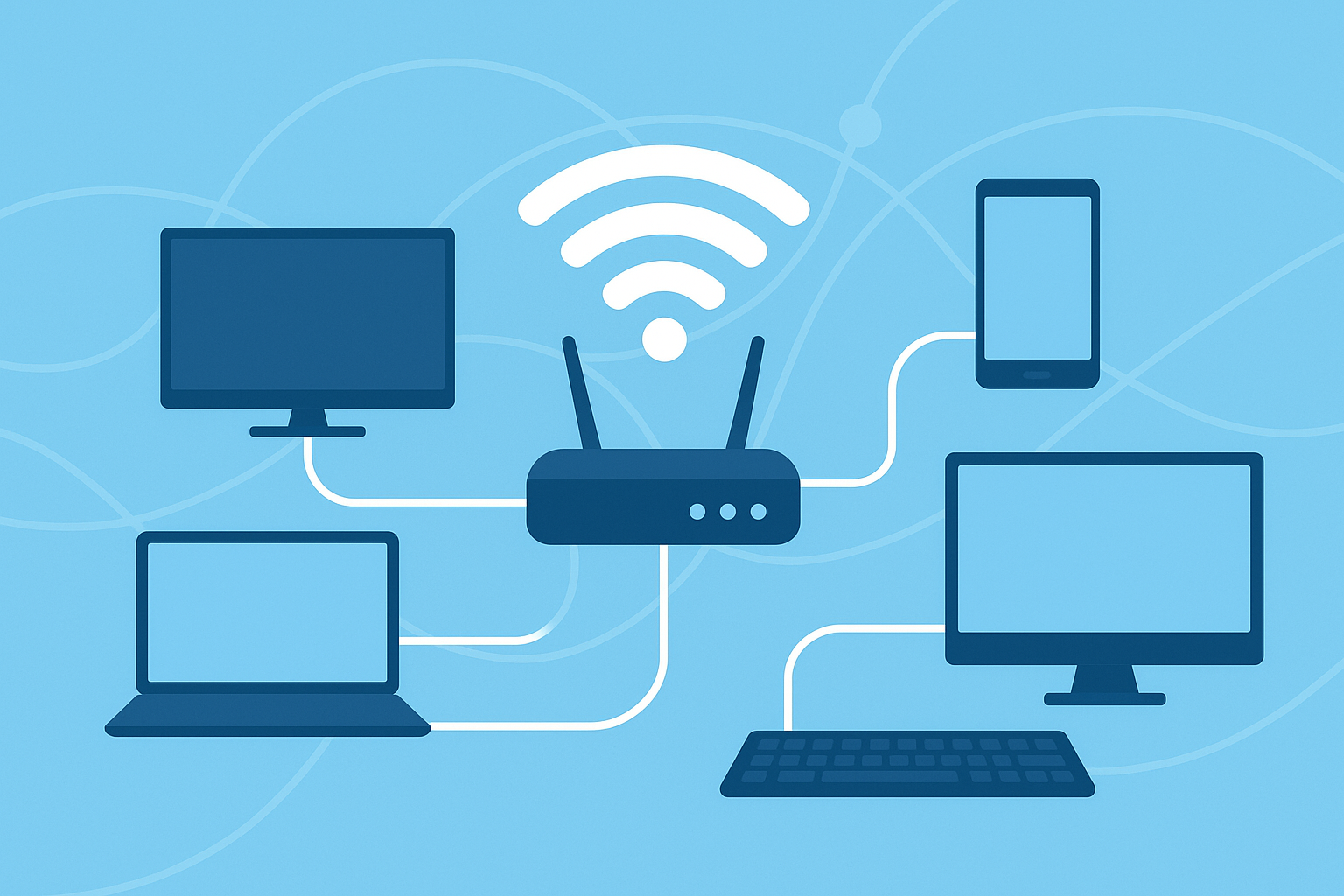
Bandwidth is essentially the amount of data your internet connection can handle at once. Since your bandwidth is shared across all devices in your home, it’s important to consider not just the number of devices but how each one is used.
For example, if four people are working or studying online simultaneously, each device might only get a portion of the total bandwidth. Add smartphones, tablets, or streaming devices into the mix, and that portion becomes even smaller.
This is why a 100 Mbps plan often hits the sweet spot—it’s fast enough to accommodate multiple devices doing everyday tasks like video calls, streaming, or gaming without slowing down.
When comparing providers, like Xfinity or AT&T, always consider not just the speed advertised but how it will handle multiple devices at once.
How to Determine the Right Internet Speed for Your Home
The easiest way to estimate your needs is to consider the number of devices and the tasks each one performs. Divide the total speed by the number of devices that will be online simultaneously to get a sense of how much bandwidth each device will receive.
For instance:
- Light users: Checking emails or browsing the web typically requires less than 5 Mbps per device.
- Streaming video: HD and 4K streaming uses roughly 5–25 Mbps per device.
- Online gaming: Most games require 3–10 Mbps, but simultaneous downloads or streams increase this need.
For a family of four with multiple devices, a 100 Mbps plan allows each person to work, stream, or play online games comfortably. If your household mainly does light tasks, even a 50 Mbps plan could suffice, but 100 Mbps provides a buffer for smoother performance.
When a 100 Mbps Connection Is Enough
Most households won’t need more than 100 Mbps. Here’s a breakdown of scenarios where this speed is ideal:
- Multiple devices in use: 3–5 computers, tablets, or smartphones online simultaneously.
- Streaming high-definition content: Watching 4K or HDR videos on multiple devices.
- Online gaming: Smooth multiplayer gaming without lag.
- Remote work and online school: Video calls, file uploads, and cloud-based tools run seamlessly.
Even with all these activities happening at once, a 100 Mbps connection typically keeps your experience lag-free.
Situations Where You Might Need More Than 100 Mbps
While 100 Mbps works for most homes, certain households may need faster speeds. Consider upgrading if you frequently encounter these situations:
- Many connected devices: More than six devices streaming or working simultaneously.
- Large file sharing: Regular uploads or downloads of large video or work files.
- Live streaming or content creation: High-bandwidth video or music streaming.
- Smart home devices: Multiple security cameras, smart TVs, and other IoT devices can quickly consume bandwidth.
In these cases, providers offering higher-speed plans, such as CenturyLink or Suddenlink, may be a better fit.
Comparing Providers Offering 100 Mbps Plans
Here’s a snapshot of popular internet providers with 100 Mbps options:
Xfinity
- Starting price: $34.95/mo
- Internet type: Cable
- View Xfinity Plans
AT&T
- Starting price: $35.00/mo
- Internet type: Fiber optic
- View AT&T Plans
CenturyLink
- Starting price: $49.00/mo (price for life)
- Internet type: DSL
- View CenturyLink Plans
Suddenlink
- Starting price: $35.00/mo
- Internet type: Fiber optic
- View Suddenlink Plans
When evaluating plans, consider not just the speed but also price, reliability, and customer service. A slightly faster or slower plan may make a difference depending on your household’s needs.
Optimizing Your 100 Mbps Connection
Even the fastest internet plan can underperform if your home setup isn’t optimized. Here are tips to get the most out of your 100 Mbps connection:
- Place your router centrally: This ensures a strong signal throughout your home.
- Use wired connections when possible: Ethernet cables provide more reliable speeds than Wi-Fi.
- Upgrade your router: Modern routers handle multiple devices better and improve overall performance.
- Limit background activity: Streaming or large downloads in the background can slow down your connection.
Regularly checking your speed can also help you verify that your provider delivers the plan you’re paying for.
Final Thoughts
A 100 Mbps internet connection is more than adequate for most households, supporting streaming, gaming, remote work, and multiple devices at the same time. Choosing the right provider and plan ensures that your connection remains fast, reliable, and able to handle your household’s demands.
If your family has higher bandwidth needs, such as heavy file sharing, live streaming, or smart home devices, considering a faster plan might be worthwhile. Otherwise, a 100 Mbps plan strikes the perfect balance between speed and affordability.
Related Posts
 Technology
Internet Plan Trends Shaping the US Market in 2026
Explore the latest US internet plan trends, including fiber expansion, 5G growth, hybrid connectivity, pricing changes, and consumer preferences.
 Broadband Deals
Xfinity 500 Mbps vs. 1 Gig: Is Upgrading Really Worth It?
Compare Xfinity 500 Mbps and 1 Gig internet plans, costs, performance, and value to determine whether upgrading is worth your money.
 cable deal
cheap internet deals
cable deal
cheap internet deals
Does Budget Cable Internet Affect Gaming and Streaming?
Learn whether affordable cable internet can impact gaming and streaming performance, plus tips to reduce lag, buffering, and connectivity issues.
 Internet Bundles
Technology
Wifi
Internet Bundles
Technology
Wifi
AT&T Mobile Hotspot Plans Explained for 2026
Learn how AT&T mobile hotspot plans work, compare options, understand data limits, and determine whether a hotspot can replace home internet.
 Broadband Deals
cheap internet deals
Broadband Deals
cheap internet deals
Top 5 States for Remote Workers With Best Internet Access
Discover the top 5 U.S. states offering exceptional internet coverage, fast broadband, and ideal conditions for remote workers and digital professionals.