Setting Up Internet Phone Service? Here’s What Actually Matters
If you are planning to install internet phone service at home or for a small business, it helps to understand exactly how it works, what it costs, and whether it fits your communication needs. Internet calling, commonly known as VoIP, has moved from being a niche alternative to a reliable and widely adopted phone solution.
Today’s households and businesses are no longer limited to a single phone provider or a single type of service. Alongside traditional landlines and mobile phones, internet phone service has become a practical option for people who want lower monthly costs, flexible features, and competitive international calling rates.
While landline and cellular services are familiar, internet-based phone service became mainstream in the mid-2000s as broadband access expanded. Since then, improvements in internet reliability and call quality have made VoIP a strong replacement for conventional phone systems.
This guide walks through what internet phone service is, how it works at home, the advantages and drawbacks, and what you should consider before installing it for the first time.
What Is Internet Phone Service?
Internet phone service, also called VoIP (Voice over Internet Protocol), allows you to make and receive calls using your internet connection instead of traditional copper phone lines. Rather than routing calls through a telephone network, your voice is converted into digital data and transmitted over the internet.
Most home VoIP setups rely on broadband connections such as cable or DSL, which provide enough bandwidth to support clear voice communication alongside regular internet usage.
From a user’s perspective, internet phone service feels similar to a traditional phone. You can dial numbers, receive calls, use voicemail, and access common calling features. The difference lies in how the call travels from your phone to the person on the other end.
How Internet Phone Service Works at Home
When you speak into an internet-connected phone, your voice is converted into small digital packets. These packets are transmitted through your internet connection and reassembled on the receiving end into clear audio.
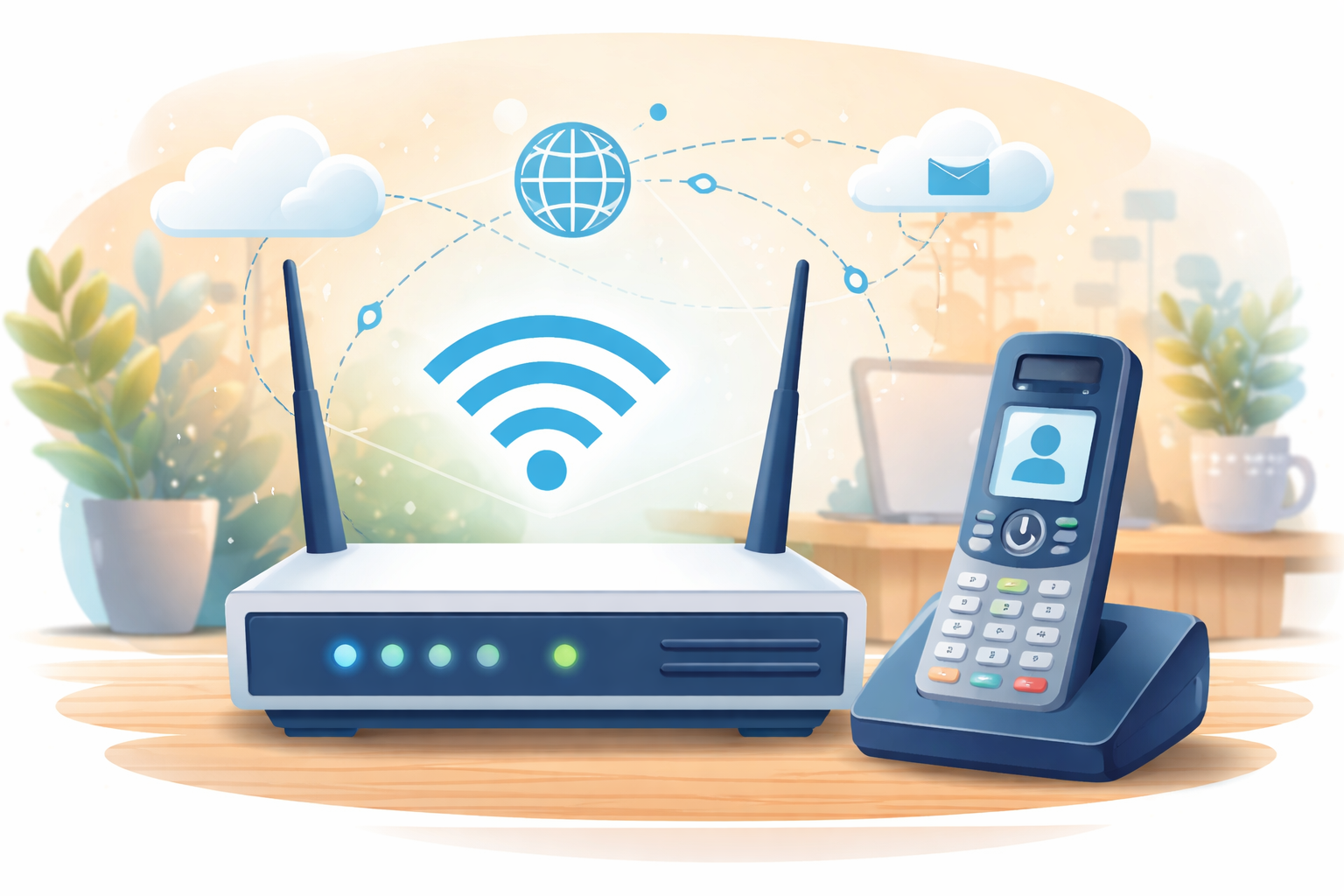
Most providers install a small device known as a telephony adapter or ATA (Analog Telephone Adapter). This device connects to your modem or router and allows you to plug in a standard home phone. Some services also support IP phones that connect directly to your network without an adapter.
Because the service depends on your internet connection, call quality is influenced by bandwidth, network congestion, and overall connection stability. A reliable broadband plan is essential for consistent performance.
Why Internet Calling Has Become So Popular
Internet phone service gained traction because it addressed common frustrations associated with traditional phone plans. High monthly fees, long-distance charges, and limited features made conventional services less appealing once broadband internet became widely available.
VoIP providers capitalized on this shift by offering flexible plans, advanced calling tools, and lower overall costs. As a result, many households and small businesses now rely on internet calling as their primary phone service.
The Benefits of Internet Phone Service
Internet phone service offers several advantages that make it attractive for both residential users and businesses.
Lower Monthly Costs
One of the most compelling reasons people switch to internet phone service is affordability. Many home phone plans start around $6 per month, significantly lower than traditional landline rates. Providers often offer bundle discounts when phone service is added to an existing internet or TV plan, further reducing costs.
For users who make frequent long-distance or international calls, the savings can be substantial over time.
Advanced Calling Features
Internet phone service typically includes standard features such as Caller ID, Call Waiting, and voicemail. In addition, many providers include advanced tools that are either unavailable or cost extra with traditional phone services.
These features may include call forwarding to mobile devices, voicemail transcription, telemarketing call blocking, simultaneous ring on multiple devices, and even caller ID displayed on compatible TVs. These capabilities improve convenience and help users manage calls more efficiently.
Competitive International Calling Rates
International calls through internet phone service are generally far more affordable than those made through traditional carriers. Many providers offer low per-minute rates or bundled international calling plans, making VoIP an ideal option for families or businesses that communicate overseas.
Flexibility and Portability
Internet phone numbers are not tied to a physical location in the same way landlines are. This flexibility allows users to take their service with them when moving or traveling, as long as they have a stable internet connection.
For businesses, this portability supports remote work and multi-location operations without the need for complex phone infrastructure.
The Drawbacks You Should Consider
While internet phone service has clear advantages, it is important to understand the limitations before making the switch.
Dependence on Electricity and Internet
Unlike traditional landlines that draw power from the phone network, internet phone service requires electricity to operate. During a power outage, your modem, router, and telephony adapter will stop working unless you have a backup power source.
Similarly, if your internet connection goes down, your phone service will be unavailable until connectivity is restored.
Emergency Calling Limitations
Most VoIP providers support 911 calling, but the experience may differ from a traditional landline. Because calls are routed through the internet, your location information may not automatically update if you move or change addresses.
This can delay emergency response if the provider does not have accurate address information on file. It is essential to confirm how emergency calling works and ensure your address is properly registered with the service.
Internet Phone Service vs Traditional Landlines
When comparing internet phone service to traditional landlines, the differences go beyond cost.
Landlines are highly reliable during power outages and provide consistent call quality regardless of internet conditions. However, they often come with higher monthly fees, limited features, and additional charges for long-distance calls.
Internet phone service offers modern features, lower costs, and greater flexibility, but relies on internet stability and power availability. For many users, the benefits outweigh the drawbacks, especially when paired with a reliable broadband connection.
Is Internet Phone Service Right for Your Home?
Internet phone service is well suited for households that already rely on broadband internet and want to reduce monthly expenses. It works particularly well for users who make frequent long-distance or international calls or who value advanced call management features.
Homes with unreliable internet service or frequent power outages may want to consider backup solutions, such as a mobile phone or battery backup system, to maintain connectivity during disruptions.
Internet Phone Service for Businesses
For businesses, internet phone service offers scalability and cost efficiency that traditional systems struggle to match. Features like call routing, voicemail-to-email, conference calling, and virtual extensions support professional communication without expensive hardware.
Companies exploring internet solutions often pair VoIP with high-quality broadband plans, such as AT&T Business Internet, to ensure consistent performance and support business-critical communication needs.
What to Check Before Installing Internet Phone Service
Before signing up, it is important to evaluate a few key factors:
- Internet speed and reliability
- Emergency calling support and address registration
- Compatibility with existing phones
- Available features and add-ons
- Contract terms and pricing transparency
Taking time to review these details helps prevent surprises and ensures the service meets your expectations.
Final Thoughts
Internet phone service has matured into a dependable and cost-effective alternative to traditional landlines. With competitive pricing, advanced features, and flexible usage, it meets the needs of modern households and businesses alike.
Understanding how it works, where it excels, and where it has limitations allows you to make an informed decision. For users with stable internet access and a desire for lower costs and greater flexibility, internet calling can be a smart and practical choice.
Related Posts
 cheap internet deals
cheap internet plans
Internet Bundles
cheap internet deals
cheap internet plans
Internet Bundles
MetroPCS and Netflix: The Best Streaming Experience Guide
Learn how MetroPCS works with Netflix, reduce buffering, manage data usage, choose the right plan, and enjoy a better mobile streaming experience.
 Internet Bundles
Broadband Installation
Wifi
cheap internet deals
Internet Bundles
Broadband Installation
Wifi
cheap internet deals
Best DIRECTV Internet Services Provider for Your Home
Discover the best DIRECTV internet services, compare providers, pricing, speeds, bundles, and expert tips to choose the right home internet solution.
 Technology
Wifi
Technology
Wifi
How To Test Your Internet Speed?
Learn how to test your internet speed accurately, understand speed test results, fix slow connections, and improve your internet performance.
 cheap internet deals
Best Free & Legal Movie Streaming Sites in 2026
Discover the best free and legal movie streaming sites in 2026, including Tubi, Pluto TV, Plex, Hoopla, Kanopy, and more to watch movies online for free.
 Technology
YouTube Key Commands That Make Watching Videos Faster
Learn the best YouTube key commands to navigate videos faster, improve productivity, control playback easily, and enjoy a smoother streaming experience.