Fiber, Cable, or 5G Home Internet?
Choosing a home internet plan for a family is different from choosing one for a single user. In many households, the network needs to support streaming in multiple rooms, online gaming, homework, video calls, smart devices, and constant background usage all at once.
That is why the right plan is not just about buying the fastest advertised package. It is about matching the connection type and speed tier to the way your household actually uses the internet.
Why family internet needs are more complicated now
A typical household may have televisions streaming in the evening, kids using tablets, parents on video calls, gaming consoles downloading updates, and phones connected throughout the day. Even when people are not actively working or studying, smart speakers, cameras, thermostats, and other connected devices add to the network environment.
The result is simple: the more active users and devices you have, the more important consistency becomes.
Start with the activities that matter most
Not every internet task puts the same kind of pressure on a connection.
Streaming
Streaming video is common in nearly every household. A single stream may not be demanding on a modern plan, but multiple simultaneous streams can increase usage quickly, especially during peak evening hours.
Gaming
Online gaming often depends less on huge download numbers than people expect. Latency, stability, and network consistency matter a lot. Large game downloads and updates do benefit from stronger speeds, but smooth gameplay depends heavily on how responsive the connection feels.
Video calls and schoolwork
Families often need internet to support meetings, classes, homework platforms, and cloud access at the same time. That makes a balanced plan important, especially in households with overlapping schedules.
Understanding the three main choices
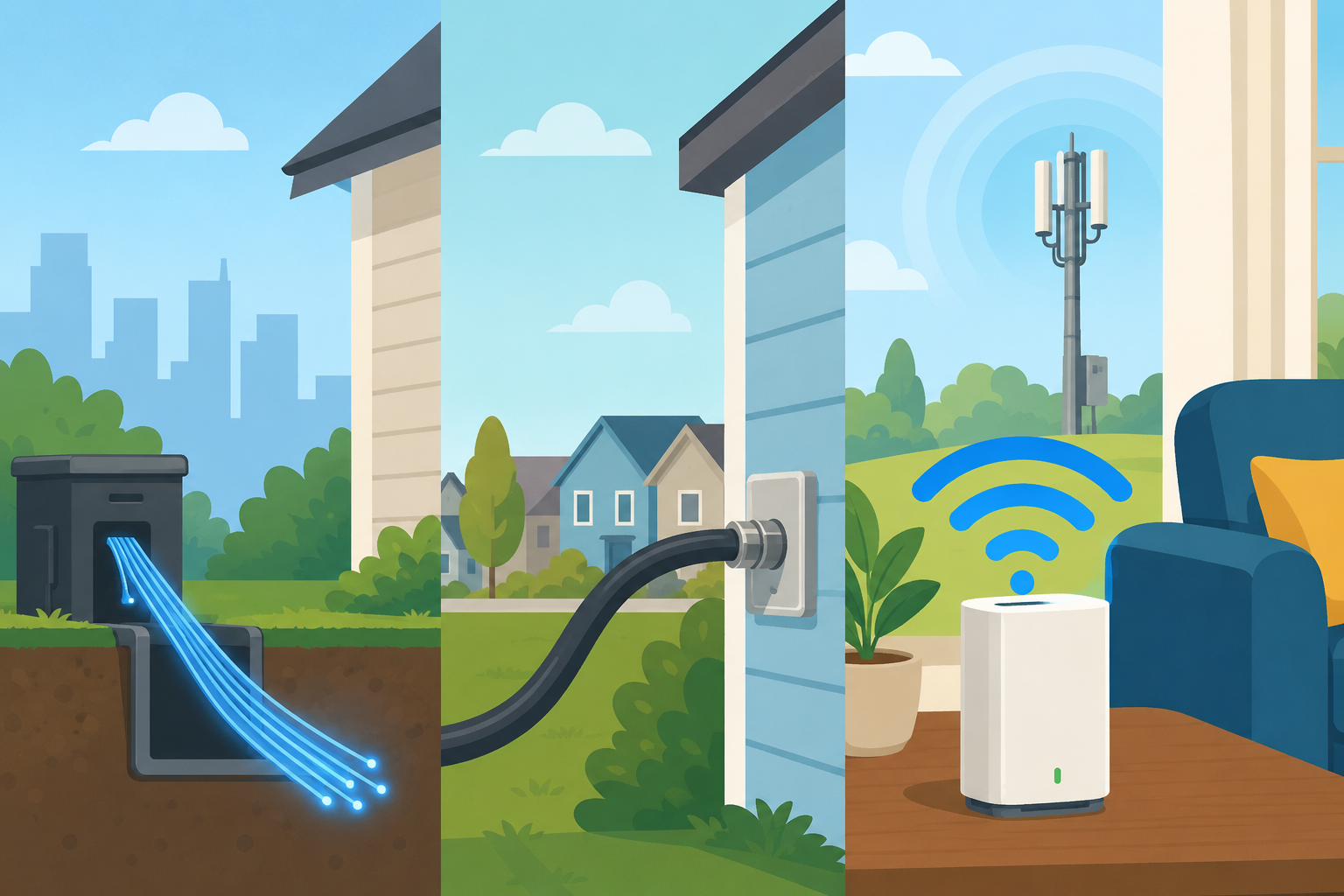
When families compare internet plans in the US, they commonly choose among fiber, cable, and 5G home internet. Each one can be the right answer depending on the address, provider quality, and household habits.
Fiber internet for busy households
Fiber is often the strongest overall choice when available.
Why families like fiber
Fiber usually offers fast download speeds, excellent upload performance, and consistent service. That combination helps when multiple people are streaming, gaming, and working at the same time.
Strong upload capability is especially useful for homes with frequent video calls, cloud backups, or content uploads. Fiber also tends to feel more resilient under heavier simultaneous use.
Potential downside
The main drawback is availability. Many households still do not have access to fiber, and in some markets the price may be higher than entry-level alternatives.
Cable internet for mainstream family use
Cable remains one of the most common options and can work very well for families.
Why cable is often a practical choice
Cable internet is widely available and often offers enough speed for streaming, gaming, schoolwork, and work-from-home use in the same household. For many families, a midrange or upper-midrange cable plan is a good balance of cost and performance.
What to watch for
Upload speeds may be weaker than fiber, and performance can vary by local network conditions. In some neighborhoods, peak-time congestion may affect the experience more noticeably.
5G home internet for flexible setup and simple pricing
5G home internet has become a popular option because it is easy to install and often comes with straightforward pricing.
Why some families choose 5G
The appeal is convenience. There may be no technician appointment, no major installation process, and no complicated equipment setup.
Where caution is smart
5G performance can vary by location, signal quality, and network congestion. For light-to-moderate use, 5G may be perfectly fine. For households with serious gaming demands, many simultaneous users, or heavy streaming across multiple rooms, consistency should be tested carefully.
What matters most for streaming households
Families who stream frequently should think beyond a single headline speed number.
Look for these factors
Reliable evening performance
Enough bandwidth for multiple simultaneous streams
No restrictive data caps if usage is heavy
Wi-Fi coverage that reaches the rooms where people actually watch
A strong plan can still disappoint if the router is in the wrong place or the home has weak wireless coverage.
What matters most for gaming households
Gaming households should pay close attention to network stability.
Gaming-friendly internet depends on:
Low and stable latency
Reliable connection quality
Fast enough speeds for downloads and updates
Router quality and device placement
A gamer using Wi-Fi far from the router may have a worse experience than a gamer on a slightly slower plan with a stronger in-home setup.
Do not overlook the home network
Families often upgrade their internet package when the real issue is Wi-Fi quality inside the home.
Your router can make or break the experience
If the signal is weak in bedrooms, upstairs spaces, or bonus rooms, streaming may buffer and gaming may lag even if the internet service itself is solid. In larger homes, mesh Wi-Fi systems can help spread coverage more evenly.
For gaming consoles or desktop setups, wired Ethernet connections can improve stability significantly.
Budget matters, but so does long-term value
A cheaper plan is not a bargain if it causes daily frustration. At the same time, many families pay for more speed than they actually need.
Compare these before signing up
Monthly rate after promotional periods
Equipment rental fees
Contract terms
Data policies
Upgrade flexibility
Local provider reputation
The best value plan is one that supports your household smoothly without overspending on unused capacity.
A simple way for families to decide
If fiber is available at a fair price, it is often the top overall choice for homes with multiple simultaneous users. If fiber is not available, cable is frequently the next most practical option for balanced family use. 5G home internet can be appealing for simpler households or addresses where wired options are limited, but it should be evaluated carefully if gaming and heavy streaming are priorities.
Find Broadband, Find Internet By Zip Code
Final thoughts
Families choosing between fiber, cable, and 5G home internet should focus on real usage patterns, not just marketing language. Streaming households need consistent bandwidth. Gaming households need responsive, stable connections. Busy homes with mixed use need a plan that handles multiple people at the same time without constant slowdowns.
In many cases, the smartest choice is the one that offers dependable local performance, fits the budget over the long term, and works well with the equipment inside the home. When you match the plan to the household instead of guessing based on ads, everyone gets a better online experience.
FAQ
Is fiber better than cable for families?
Often yes, especially for households with many simultaneous users, frequent video calls, and heavy upload needs. But cable can still be an excellent option in many areas.
Is 5G home internet good enough for streaming?
It can be, especially for light-to-moderate households. The key question is how consistent the service is at your specific address.
What matters more for gaming, speed or latency?
Latency and stability are extremely important for online gaming, while faster speeds help more with downloads and updates.
Do families need the fastest plan available?
Not always. Many households do best with a well-matched midrange or upper-midrange plan rather than the most expensive tier.
Can better Wi-Fi fix buffering and lag issues?
Yes, in many cases. Router placement, mesh systems, and wired connections can improve the home network experience significantly.
Related Posts
 Broadband Deals
Technology
Broadband Deals
Technology
What Is 5G and Why It Matters for Businesses and Everyday Life
Learn what 5G is, how it works, and why it matters for businesses and consumers. Discover its impact on speed, IoT, automation, and future connectivity.
 Technology
How to Choose High-Speed Satellite Internet for Your Home
Compare the best high-speed satellite internet providers, their features, coverage, speeds, pricing, and tips to choose the right internet service.
 Broadband Deals
cable deal
Broadband Deals
cable deal
How Spectrum Internet Compares to Xfinity, AT&T & HughesNet
Compare Spectrum Internet with Xfinity, AT&T, and HughesNet based on speed, pricing, reliability, technology, and value to choose the right provider.
 cheap internet deals
Best DSL Internet Providers for Reliable Home Internet
Compare the best DSL internet providers, including AT&T, CenturyLink, and Frontier. Learn about speeds, pricing, pros, and how to choose the right plan.
 Internet Bundles
How to Temporarily Pause Your Internet Service and Save Money
Learn how to temporarily pause your internet service, avoid cancellation fees, save money during travel, and easily restore your connection when needed.