Affordable Internet Assistance Programs in Denver
Access to reliable internet is no longer a luxury. From remote work and online classes to telehealth appointments and job applications, a stable connection has become essential for daily life. For many households in Colorado, however, monthly broadband bills can still feel out of reach. That’s why more Denver residents are exploring affordable internet assistance programs designed to reduce costs without sacrificing connectivity.
If you’re searching for affordable ways to stay connected, this guide breaks down the most practical options available in Denver, how eligibility works, and what to consider before choosing a plan.
Why Affordable Internet Matters in Denver
Denver continues to grow rapidly, and with that growth comes increasing demand for fast, dependable internet service. Families, students, and seniors all rely heavily on home internet access, especially as digital services become part of everyday life.
The challenge is that pricing varies widely depending on your location, provider availability, and internet type. Many households are surprised to learn that assistance programs and discounted plans are already available through several major providers.
People comparing options often start by researching cheap internet service providers in Denver to understand which companies offer lower monthly rates and support programs for qualifying residents.
Understanding Low-Cost Internet Assistance Programs
Internet assistance programs are designed to help qualifying households access affordable broadband service. These programs may come from internet providers themselves, nonprofit partnerships, or government-supported initiatives.
Most plans are built around:
Reduced monthly pricing
Lower installation costs
Discounted equipment rentals
Flexible contract terms
Basic speeds suitable for daily use
Eligibility usually depends on income level or participation in federal assistance programs such as SNAP, Medicaid, SSI, or free and reduced school lunch programs.
Types of Internet Available in Denver
Before choosing a discounted plan, it helps to understand the types of internet commonly available in the area.
Fiber Internet
Fiber-optic service offers some of the fastest and most reliable connections available today. It’s especially useful for households with multiple devices, video conferencing, online gaming, or remote work needs.
Many neighborhoods in Denver now have access to fiber internet, although availability still depends on the provider and location.
Cable Internet
Cable internet is widely available and often balances affordability with solid speeds. It works well for streaming, browsing, and everyday household use.
Fixed Wireless and 5G
Wireless home internet options are becoming more common in Denver, particularly for renters or households looking for simpler installation processes.
Popular Internet Assistance Options in Denver
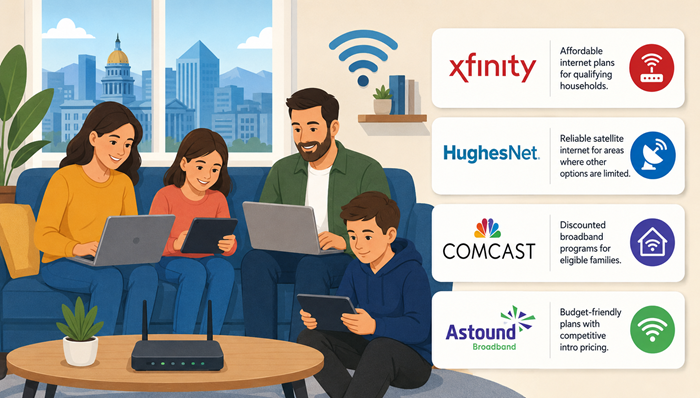
Several major providers offer affordable internet plans and budget-focused services for qualifying households across Denver. Availability can vary depending on neighborhood and ZIP code.
Xfinity Internet Assistance Plans
Many Denver residents search for xfinity low income internet programs because Comcast offers reduced-cost broadband options for eligible households. These plans are often designed for students, seniors, and families participating in assistance programs.
The provider may also include discounted equipment and flexible introductory pricing depending on local promotions.
For households interested in bundling services, exploring current xfinity mobile and internet deals can sometimes help reduce overall monthly communication expenses.
HughesNet Affordable Internet Options
In areas where cable or fiber coverage is limited, HughesNet can be an alternative for households looking into low income internet providers with wider rural and suburban availability.
Satellite internet may not deliver the same speeds as cable or fiber connections, but it can still support everyday browsing, email access, online learning, and basic streaming needs for qualifying users.
Comcast Discounted Broadband Programs
Residents comparing internet providers Denver options may also come across comcast low income internet programs that focus on expanding affordable access throughout underserved communities.
These plans are typically aimed at making home broadband more accessible through lower monthly costs and simplified setup options.
Astound Broadband Budget Plans
Astound Broadband has become another option for Denver households looking for affordable internet service with competitive entry-level pricing.
Some plans may appeal to renters, students, and families seeking dependable speeds without committing to premium-priced packages.
Who Qualifies for Affordable Internet Programs?
Eligibility requirements differ slightly between providers, but most programs consider household income or participation in government assistance programs.
You may qualify if someone in your household participates in:
SNAP
Medicaid
SSI
Federal Public Housing Assistance
Veterans Pension programs
National School Lunch Program
Pell Grant programs
Some providers also offer special pricing for seniors, veterans, or college students.
How Denver ZIP Codes Affect Internet Pricing
One thing many consumers overlook is how dramatically internet costs can change depending on where they live.
Infrastructure availability, local competition, and provider coverage all influence pricing. In some Denver neighborhoods, residents may have access to multiple providers competing for customers. In others, options can be more limited.
Understanding why internet prices change by zip code can help consumers make more informed decisions when comparing plans and negotiating pricing.
Choosing the Right Internet Plan for Your Household
Affordable internet doesn’t always mean choosing the cheapest plan available. The best option depends on how your household uses the internet every day.
For Students
Students often need reliable speeds for video classes, research, and streaming educational content. Budget-conscious households should focus on plans with stable performance and predictable monthly costs.
Families researching affordable education-focused options may benefit from reading about budget-friendly internet for students to better understand what speeds and features matter most.
For Remote Workers
Remote workers usually need dependable upload speeds for video meetings and cloud-based software. Fiber and cable plans often provide the most stable experience.
For Seniors
Seniors may prioritize affordability, simple billing, and customer support over extremely high speeds. Many assistance programs are designed specifically with these needs in mind.
For Large Families
Households with multiple users streaming, gaming, or working online simultaneously should look for plans that provide enough bandwidth to avoid slowdowns during peak hours.
What to Compare Beyond Monthly Price
When comparing plans, don’t focus only on the advertised monthly rate. Several hidden factors can affect the real cost over time.
Equipment Fees
Some providers charge separate modem or router rental fees each month.
Installation Costs
Promotional plans may waive installation fees, while others require upfront setup charges.
Contract Terms
Some internet plans lock customers into long-term agreements with cancellation fees.
Speed Caps
Budget plans may include lower speed tiers that impact streaming quality or video conferencing.
Data Limits
Certain providers enforce monthly data caps, which can increase costs if exceeded.
Tips for Finding Better Internet Deals in Denver
Finding affordable internet often requires a little research and timing.
Compare Multiple Providers
Don’t settle for the first advertised plan. Availability and pricing differ across neighborhoods.
Ask About Promotions
Many providers offer introductory discounts, student pricing, or seasonal specials.
Negotiate Existing Bills
Current customers can sometimes lower monthly rates by asking about retention offers or newer promotions.
Check Eligibility Annually
Program requirements and discounts may change over time, so it’s worth reviewing your eligibility regularly.
Understand Your Actual Usage
Households often overpay for speeds they don’t really need. Streaming and browsing requirements are usually lower than people expect.
If you’re unsure which package fits your needs, reviewing resources about choosing the best internet plan in the us can help simplify the decision-making process.
Why Affordable Internet Access Supports Denver Communities
Reliable internet access affects far more than entertainment. It directly impacts education, employment, healthcare access, and financial opportunities.
Affordable broadband helps:
Students complete assignments from home
Job seekers apply for employment opportunities
Families access telehealth services
Small businesses operate efficiently
Seniors stay connected with loved ones
As Denver continues to expand digitally, accessible broadband remains an important part of community growth and economic opportunity.
Final Thoughts
Finding affordable home internet in Denver is more realistic today than many people realize. Assistance programs from major providers, combined with growing competition and expanding infrastructure, have created more budget-friendly options for households across the city.
Whether you’re a student, a senior, a remote worker, or simply trying to reduce monthly expenses, comparing plans carefully can lead to meaningful savings without sacrificing reliability.
The key is understanding your eligibility, comparing available providers in your neighborhood, and choosing a plan that matches your actual internet usage needs.
FAQs
What is the best affordable internet option in Denver?
The best option depends on your location, budget, and internet usage needs.
Can low-income households qualify for discounted internet?
Yes, many providers offer discounted plans for eligible households.
Are internet assistance programs available for students?
Yes, several providers offer student-focused affordable internet programs.
Does Denver have fiber internet availability?
Yes, fiber service is available in many Denver neighborhoods.
Can internet prices vary within Denver?
Yes, pricing and provider availability often depend on ZIP code coverage.
Related Posts
 Technology
How to Choose High-Speed Satellite Internet for Your Home
Compare the best high-speed satellite internet providers, their features, coverage, speeds, pricing, and tips to choose the right internet service.
 Broadband Deals
cable deal
Broadband Deals
cable deal
How Spectrum Internet Compares to Xfinity, AT&T & HughesNet
Compare Spectrum Internet with Xfinity, AT&T, and HughesNet based on speed, pricing, reliability, technology, and value to choose the right provider.
 cheap internet deals
Best DSL Internet Providers for Reliable Home Internet
Compare the best DSL internet providers, including AT&T, CenturyLink, and Frontier. Learn about speeds, pricing, pros, and how to choose the right plan.
 Internet Bundles
How to Temporarily Pause Your Internet Service and Save Money
Learn how to temporarily pause your internet service, avoid cancellation fees, save money during travel, and easily restore your connection when needed.
 Broadband Deals
Broadband Installation
Broadband Deals
Broadband Installation
CenturyLink in Farmington: A Complete Guide for Local Users
Explore CenturyLink Farmington plans, pricing, installation, performance, and expert tips to choose the best home internet service for your needs.