Finding Reliable Internet Without Overpaying
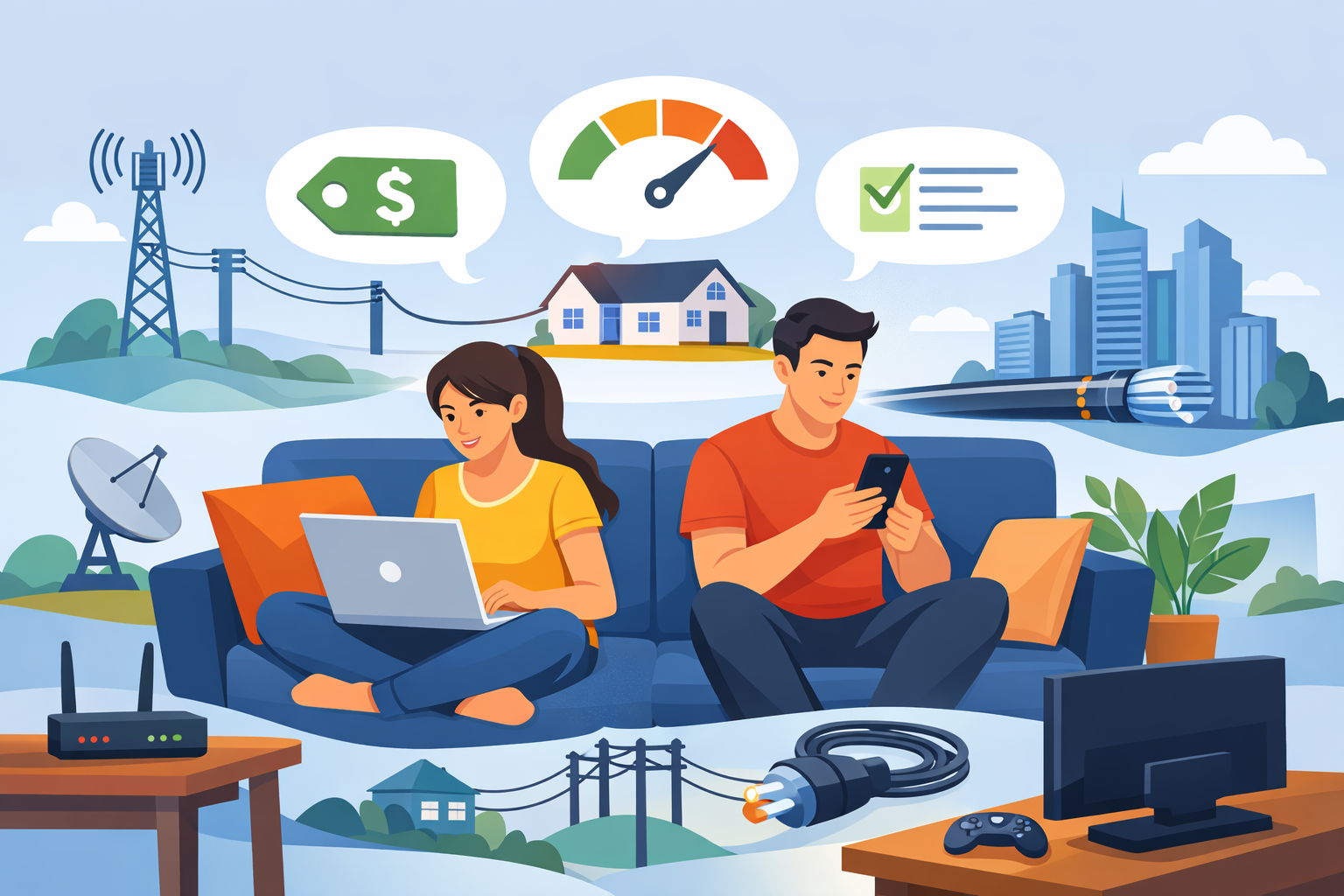
Fast, stable internet is no longer optional. It powers remote work, streaming, online education, gaming, smart homes, and business operations. Choosing the best internet provider in your area directly affects your daily productivity and entertainment experience.
If you are searching for affordable, reliable internet, you need to evaluate more than just price. Network type, real-world speeds, reliability, data caps, and contract flexibility all impact the total value of your plan. Many households overpay simply because they do not compare available providers or understand how different technologies perform.
Today’s internet market includes DSL, cable, fiber, and wireless broadband. Each serves different needs and budgets. The key is matching your household usage with the right technology and provider, not just chasing the lowest monthly rate.
This guide explains how to compare providers, what speeds you actually need, and how to identify the best value internet service in your area.
Understanding Internet Types Available Near You
DSL Internet
DSL uses traditional phone lines. It is widely available and typically the cheapest option, but speeds are limited compared to cable or fiber. DSL works best for small households with light streaming and browsing needs.
Many households looking at Frontier plans still consider DSL because of pricing stability and simple installation through Frontier plans.
Cable Internet
Cable internet uses the same infrastructure as cable TV. It offers faster speeds than DSL and works well for families streaming multiple devices at once.
Many users looking for balanced speed and price consider Spectrum internet through Spectrum internet.
Fiber Internet
Fiber delivers the fastest speeds and lowest latency. It supports heavy streaming, remote work, cloud backups, and smart home ecosystems simultaneously.
If fiber is available in your area, options like AT&T fiber from AT&T fiber or Fios service via Fios service are often premium choices.
How Much Internet Speed Do You Really Need?
According to the FCC broadband benchmark, around 100 Mbps supports advanced usage like HD streaming, video calls, and multi-device homes.
| Household Type | Recommended Speed |
|---|---|
| 1–2 users browsing + streaming | 50–100 Mbps |
| Families with streaming + gaming | 200–500 Mbps |
| Remote work + heavy streaming | 500 Mbps – 1 Gbps |
| Smart homes + creators + gaming | 1 Gbps+ |
Many households pay for gigabit speeds they never fully use. Matching speed to usage prevents overspending.
Comparing Top Internet Providers by Value
Frontier Communications
Budget-focused households often review Frontier internet pricing through Frontier internet.
Frontier typically offers:
Low entry pricing
Flexible contract terms
Wide rural coverage
Basic DSL and expanding fiber availability
This makes it attractive for cost-conscious households or backup internet setups.
Spectrum (Charter Communications)
Consumers evaluating Spectrum service reliability often compare plans using Spectrum service.
Spectrum stands out for:
No data caps in most markets
No contracts on many plans
Strong cable speeds
Wide availability in cities and suburbs
It is often a strong mid-tier choice for families.
AT&T Internet and Fiber
When researching premium network infrastructure, many compare ATT internet performance through ATT internet.
AT&T advantages:
Expanding fiber footprint
Competitive fiber pricing
Reliable backbone network
Strong bundling options
Fiber availability varies by location but offers strong long-term value.
Suddenlink Internet
Price-focused users often evaluate Suddenlink deals through Suddenlink deals.
Suddenlink often offers:
Competitive intro pricing
Moderate speed tiers
Good value for light-to-moderate households
However, availability is region-specific.
CenturyLink Internet
Consumers wanting stability often review CenturyLink internet options through CenturyLink internet.
CenturyLink strengths include:
Stable DSL service
Growing fiber network
Simple pricing structures
Strong rural infrastructure
Verizon Fios Fiber
High-performance households often compare Verizon fiber capabilities through Verizon fiber.
Fios benefits:
Symmetrical upload/download speeds
Low latency
High reliability
Excellent streaming and gaming performance
Key Factors Beyond Price When Choosing a Provider
Reliability and Network Congestion
Cheap internet becomes expensive if service drops during work calls or streaming sessions. Cable networks can slow during peak hours, while fiber typically maintains consistent performance.
Data Caps and Overage Fees
Unlimited data prevents unexpected monthly charges. Heavy streaming households should prioritize unlimited plans or very high data caps.
Contract Terms and Flexibility
Some providers lock customers into contracts with early termination fees. Others offer month-to-month service. Flexible contracts are valuable if you plan to move or test providers.
Upload Speed (Often Overlooked)
Upload speed matters for:
Video conferencing
Cloud backups
Content creation
Online gaming
Fiber typically provides symmetrical speeds, while cable and DSL usually prioritize downloads.
How Bundling Services Can Lower Monthly Costs
Bundling internet with TV or mobile service can reduce total household telecom costs.
Common bundle advantages:
Discounted monthly pricing
Simplified billing
Promotional device offers
Loyalty pricing incentives
However, bundles only make sense if you actually use the services included.
Warning Signs of a Poor Internet Deal
Watch for these red flags:
Intro pricing that doubles after 12 months
Low speeds marketed as “high speed”
Mandatory long-term contracts
Hidden installation or equipment fees
Low data caps with high overage charges
Step-by-Step Method to Choose the Best Provider
Step 1: Check Availability First
Not all providers service every area.
Step 2: Match Speed to Household Usage
Avoid paying for unused bandwidth.
Step 3: Compare Total Cost — Not Just Monthly Price
Include equipment, installation, taxes, and promo expiration.
Step 4: Read Real Customer Performance Reviews
Look for reliability complaints, not just speed claims.
Step 5: Evaluate Long-Term Value
Cheapest today is not always cheapest over two years.
Future-Proofing Your Internet Choice
Internet demand grows yearly due to:
4K and 8K streaming
Cloud gaming
Smart home automation
Remote work growth
AI-powered applications
Choosing scalable infrastructure like fiber can protect you from needing upgrades soon.
Final Thoughts: Focus on Value, Not Just Price
The best internet provider is not always the cheapest — it is the one delivering stable speeds, flexible contracts, fair pricing, and reliable customer support.
For light users, DSL or budget cable may be enough. For families or remote workers, cable or entry fiber works well. For heavy users or tech households, fiber is usually the best long-term investment.
Comparing providers carefully helps avoid slow speeds, hidden fees, and long-term frustration. A little research upfront can save hundreds of dollars per year while improving daily digital performance.
Related Posts
 cheap internet plans
mobile phone plans
Broadband Deals
cheap internet plans
mobile phone plans
Broadband Deals
Which Internet Providers Offer a Cheap Mobile Plan?
Discover which internet providers offer a cheap mobile plan when you bundle services. Compare savings, features, and the best options for your budget.
 Broadband Deals
Technology
Broadband Deals
Technology
What Is 5G and Why It Matters for Businesses and Everyday Life
Learn what 5G is, how it works, and why it matters for businesses and consumers. Discover its impact on speed, IoT, automation, and future connectivity.
 Technology
How to Choose High-Speed Satellite Internet for Your Home
Compare the best high-speed satellite internet providers, their features, coverage, speeds, pricing, and tips to choose the right internet service.
 Broadband Deals
cable deal
Broadband Deals
cable deal
How Spectrum Internet Compares to Xfinity, AT&T & HughesNet
Compare Spectrum Internet with Xfinity, AT&T, and HughesNet based on speed, pricing, reliability, technology, and value to choose the right provider.
 cheap internet deals
Best DSL Internet Providers for Reliable Home Internet
Compare the best DSL internet providers, including AT&T, CenturyLink, and Frontier. Learn about speeds, pricing, pros, and how to choose the right plan.