Are Data-Only Plans the Next Big Thing?
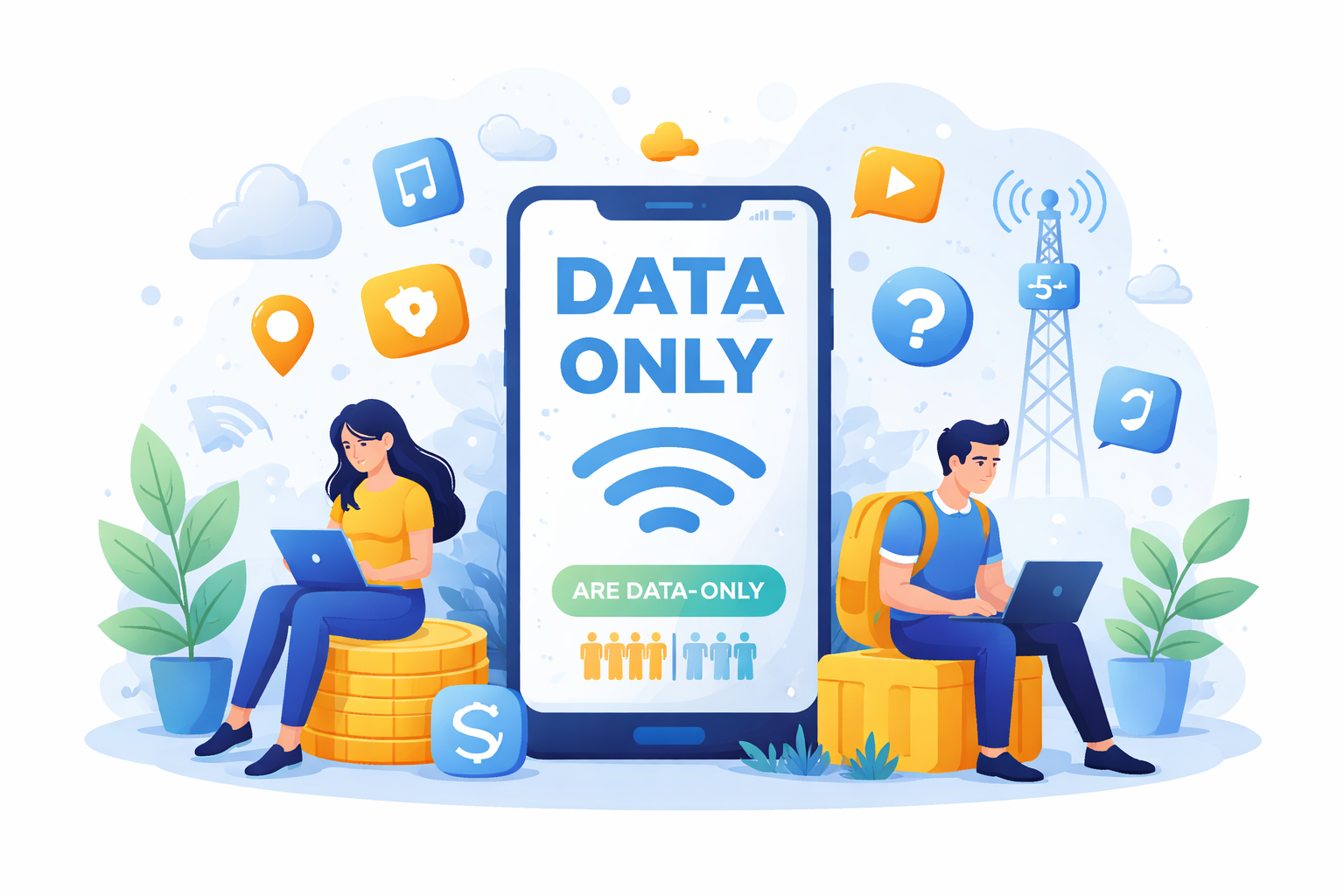
Let’s be honest — when was the last time you made a regular phone call?
Between Messenger, WhatsApp, Zoom, and FaceTime, most of us barely touch traditional call minutes or SMS anymore.
That’s why a new trend is emerging fast: data-only mobile plans.
Instead of paying for calls and texts you don’t use, these plans give you one thing — data — and let you
handle everything else through internet apps.
The idea sounds simple, but the implications are massive. Could this be the future of mobile connectivity?
Let’s dig in.
What Exactly Is a Data-Only Plan?
A data-only plan gives you mobile internet access without traditional voice or SMS services.
You can still make calls and send messages — but only through apps like:
- Telegram
- iMessage
- Google Voice
- Zoom or Teams
Essentially, it turns your phone into a portable Wi-Fi device. These plans have existed quietly for tablets, laptops, and mobile hotspots for years. But now, they’re entering the smartphone space — and they’re getting attention.
Why Data-Only Plans Are Growing in Popularity
Several major trends are fueling this shift:
1. Voice and SMS Are Going Online
Most people under 35 rarely use carrier calls anymore. With VoIP apps and internet messaging, traditional voice minutes feel outdated.
Even businesses are switching to cloud communication tools.
2. The Rise of eSIM Technology
eSIMs make it easier than ever to add or switch data plans — even temporarily. You can buy a short-term data-only plan for travel, work, or testing new networks without touching your main number.
3. People Want Simplicity and Transparency
Users are tired of confusing bills. Data-only plans are straightforward — you pay for a certain amount of data, and that’s it.
No contracts, no surprise “service fees,” no unused call minutes.
4. Perfect for Remote Workers and Travelers
If you work remotely or travel frequently, data is all you need. Many nomads now carry dual SIM phones — one for basic coverage, one for global data.
5. Affordable and Flexible
Because carriers don’t have to maintain separate infrastructure for calls or SMS, data-only plans often cost less. You pay for what you use, not what you don’t.
How Data-Only Plans Work
At their core, these plans work the same as regular mobile internet — you’re just not given a phone number for calling or texting.
Here’s how it typically works:
- You buy a SIM card or eSIM with a set data allowance (say, 10GB per month).
- You insert or activate it on your smartphone, tablet, or hotspot.
- You connect to apps that use the internet for calls, messages, or video chats.
Some plans even let you add a VoIP number (like a digital phone number) if you still want to receive calls, but entirely through data.
Pros of Data-Only Plans
1. Lower Cost
With fewer bundled services, carriers can lower costs. Many data-only plans start around $10–$20/month, depending on data size and region.
2. More Flexibility
You can use your data across devices — phone, tablet, or hotspot — without being tied to one device.
3. Perfect for eSIM Users
Switch between carriers on the go. Data-only eSIMs make it easy to hop between providers, ideal for travelers or digital nomads.
4. No Unused Services
If you don’t make traditional calls or send SMS, why pay for them?
5. Easier International Use
Many global carriers and apps now support international eSIM data packs, letting you buy short-term data wherever you go.
Cons of Data-Only Plans
1. No Traditional Calls or SMS
You’ll rely entirely on apps. If your contacts or businesses still use regular numbers, it can be inconvenient.
2. Network Prioritization
Some carriers may prioritize regular customers’ speeds over data-only plans during congestion.
3. Compatibility Issues
Older phones or locked devices may not support data-only configurations — especially eSIM setups.
4. Emergency Limitations
In some countries, emergency numbers (like 911 or 999) don’t work on data-only SIMs.
5. App Dependency
If your communication apps crash or your internet drops, you’re temporarily disconnected.
Who Should Consider a Data-Only Plan?
Data-only plans aren’t for everyone, but they’re ideal for certain types of users:
- Frequent Travelers: Use local eSIMs for cheap data abroad.
- Digital Nomads: Stay flexible across countries.
- Students: Save money by relying on Wi-Fi and messaging apps.
- Tech Enthusiasts: Combine multiple data plans for speed or coverage.
- Businesses: Use data-only devices for IoT, tablets, or staff SIMs.
If you’re someone who already relies on Messenger, Telegram, or FaceTime for communication, this could be your ideal setup.
The Future: Are Voice and SMS Becoming Obsolete?
Even major tech platforms like Apple, Meta, and Google are doubling down on internet-based communication:
- Apple FaceTime and iMessage run over data.
- WhatsApp and Messenger dominate global communication.
- Zoom, Slack, and Teams have replaced work calls.
Traditional voice services are slowly turning into legacy features — much like landlines once were.
The Business Angle: Why Carriers Like Data-Only Plans Too
This isn’t just consumer-driven — telecom companies benefit as well.
- Lower infrastructure costs: Managing one data pipeline (instead of data + voice + SMS) is cheaper.
- Simpler billing systems: Easier pricing means fewer customer disputes.
- New revenue streams: They can resell short-term eSIMs or bundle services with streaming, gaming, or IoT devices.
As 5G and soon 6G expand, data-only plans fit perfectly into the “connected everything” future.
What About 5G and IoT Devices?
Data-only plans will also power the next generation of devices — smartwatches, vehicles, wearables, and IoT home gadgets. Imagine a smartwatch or car that doesn’t need a traditional number — just fast, stable data.
That’s where the industry is heading.
In fact, most IoT connections already use data-only SIMs today.
So, Are Data-Only Plans the Next Big Thing?
All signs point to yes — though with some caveats.
Data-only plans make perfect sense for:
- People who already live online
- Remote workers and travelers
- Anyone who wants a cheaper, cleaner, and more flexible mobile setup
But if you still rely on regular calls or SMS — especially for work, authentication codes, or emergencies — you might need a hybrid setup (like keeping a minimal talk/text plan + a data-only eSIM).
Either way, the writing’s on the wall:
As more of our communication, work, and entertainment moves to the internet, data—not talk—is the real currency of mobile connectivity.
Final Thoughts
Just a few years ago, it was unthinkable to have a “phone plan” without actual phone calls.
Now, millions of users are doing just that — and loving the freedom it brings.
Data-only plans aren’t just a trend.
They’re a glimpse into the future of how we’ll stay connected — on our terms, without the fluff.
So if you’re tired of paying for unused minutes or outdated contracts, maybe it’s time to ask yourself: Do I really need a phone plan… or just data?
Related Posts
 Technology
Wifi
mobile phone plans
Technology
Wifi
mobile phone plans
What Is a Mobile Hotspot and How Does It Work?
A mobile hotspot is a portable feature or device that converts a cellular data connection (like 4G LTE or 5G) into a private Wi-Fi network
 Broadband Deals
cable deal
Broadband Deals
cable deal
Xfinity Cable Package Deals That Actually Deliver Value
Discover the best Xfinity cable package deals, compare internet and TV bundles, understand pricing, and choose the right plan for your home and budget.
 Broadband Deals
What Is TDS Internet and Is It Right for Your Home?
Learn what TDS Internet is, how it works, available plans, pricing, speeds, benefits, and how it compares with other internet providers.
 Internet Bundles
Bundle Internet, TV, and Phone Without Overpaying
Learn how to bundle internet, TV, and phone services for the best value. Compare plans, avoid hidden fees, and choose the right package for your home.
 Broadband Deals
cable deal
cheap internet deals
Broadband Deals
cable deal
cheap internet deals
Chicago Neighborhood Internet Guide for Better Connectivity
Explore internet options across Chicago neighborhoods, compare providers, understand speeds, costs, and find the best broadband solution.