5 Questions to Ask Before Signing a New Phone or Internet Contract
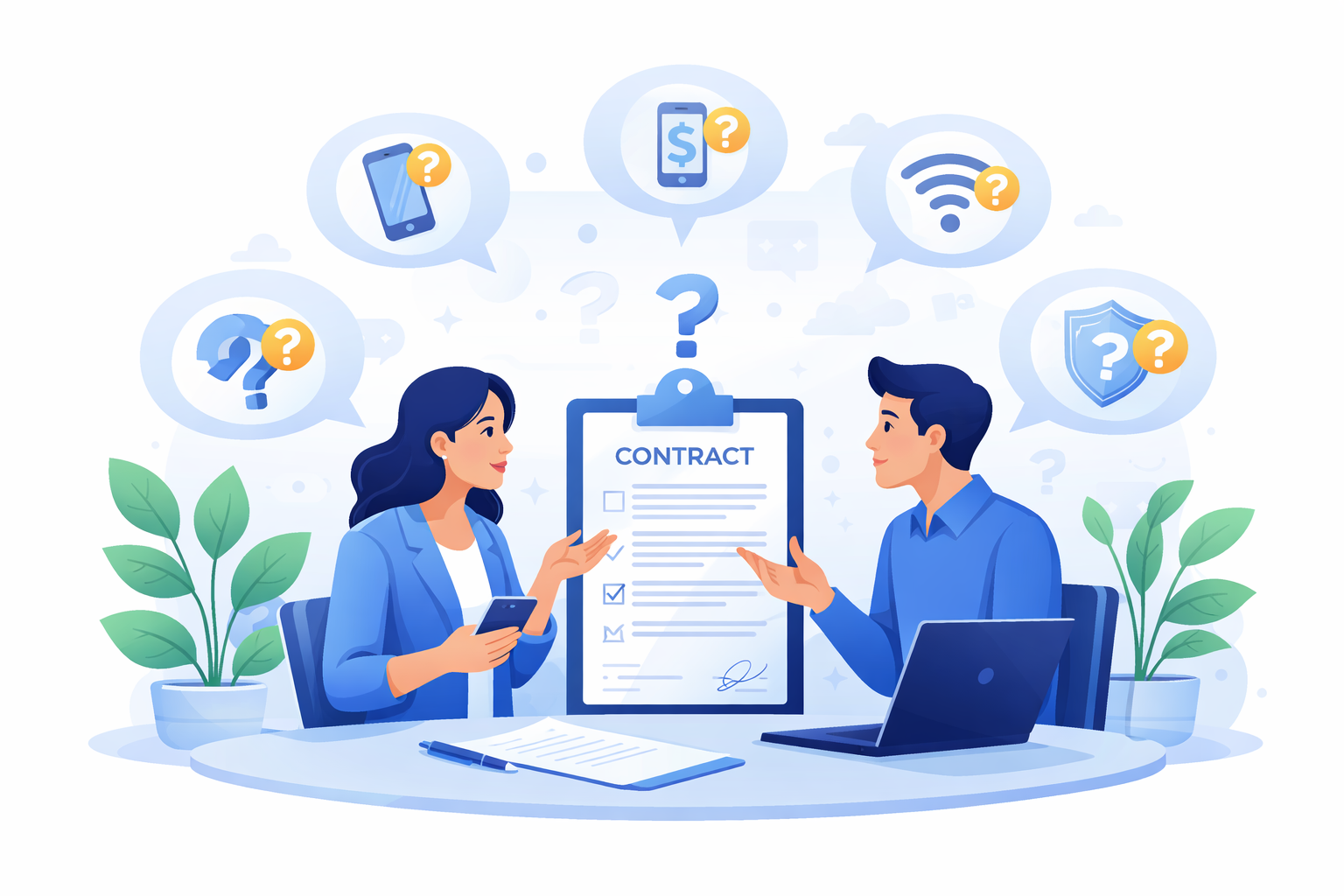
Signing a new phone or internet contract can be exciting—you’re getting faster speeds, a shiny new phone, or a better deal—but it can also be tricky. Hidden fees, confusing terms, and unexpected limitations are all potential pitfalls that can turn your “great deal” into a frustrating experience.
Before you hit “sign” on any contract, asking the right questions can save you money, time, and headaches. Here’s a guide specifically tailored for phone and internet services.
1. What Are the Total Monthly Costs, Including Fees?
It’s easy to focus on the advertised price of a plan and overlook the extra charges. Many providers advertise low monthly rates but tack on:
- Activation fees
- Equipment or modem rental fees
- Taxes and regulatory fees
- Service add-ons like security or backup services
Tip: Ask the provider to give you a full breakdown of monthly costs in writing. This helps avoid surprise bills and makes it easier to compare providers.
2. Is There a Contract Length or Early Termination Fee?
Most phone and internet providers lock customers into contracts ranging from 12 to 36 months. While these contracts may offer lower rates or promotional deals, breaking them early often comes with hefty fees.
Questions to ask:
- How long is the contract?
- Are there any penalties for early termination?
- Can I switch to a month-to-month plan after a certain period?
Understanding these terms helps you avoid getting stuck paying for services you don’t use or can’t cancel without financial consequences.
3. What Are the Data or Usage Limits?
For internet services, data caps and speed throttling can be a hidden source of frustration. For phone plans, overage charges can quickly inflate your bill if your plan doesn’t match your usage.
Phone plan considerations:
- Does the plan include unlimited talk, text, and data?
- Are there limits on hotspot or tethering use?
- What happens if you exceed your data allowance?
Internet plan considerations:
- Is there a data cap per month?
- Are speeds reduced after a certain threshold?
- Are there peak-time slowdowns?
Being clear on these points ensures your plan fits your household’s actual needs.
4. Are Promotional Offers or Discounts Time-Limited?
Many providers lure customers with introductory offers such as discounted monthly rates or free devices. These promotions often expire after 6–12 months, after which your bill can jump significantly.
Ask your provider:
- When does the promotion end?
- What will the regular price be after the promotion?
- Are there any automatic renewals or plan changes?
Knowing this helps you budget and prevents sticker shock when the promotional period ends.
5. What Are the Customer Support and Service Policies?
Reliable service and responsive support are critical, especially if you experience outages or billing errors. Before signing:
- Ask about response times and service guarantees.
- Look for hidden policies like mandatory arbitration clauses or limited refunds.
Reading reviews and asking about real-world service reliability can save you from frustration down the line.
Final Thoughts
Signing a phone or internet contract doesn’t have to be stressful. By asking these five questions, you can protect yourself from hidden fees, unexpected limitations, and contract traps.
Remember: the cheapest plan isn’t always the best. Look for transparency, flexibility, and reliable service. Doing your homework upfront can make the difference between a seamless experience and a long-term headache.
Related Posts
 Technology
Wifi
mobile phone plans
Technology
Wifi
mobile phone plans
What Is a Mobile Hotspot and How Does It Work?
A mobile hotspot is a portable feature or device that converts a cellular data connection (like 4G LTE or 5G) into a private Wi-Fi network
 Broadband Deals
cable deal
Broadband Deals
cable deal
Xfinity Cable Package Deals That Actually Deliver Value
Discover the best Xfinity cable package deals, compare internet and TV bundles, understand pricing, and choose the right plan for your home and budget.
 Broadband Deals
What Is TDS Internet and Is It Right for Your Home?
Learn what TDS Internet is, how it works, available plans, pricing, speeds, benefits, and how it compares with other internet providers.
 Internet Bundles
Bundle Internet, TV, and Phone Without Overpaying
Learn how to bundle internet, TV, and phone services for the best value. Compare plans, avoid hidden fees, and choose the right package for your home.
 Broadband Deals
cable deal
cheap internet deals
Broadband Deals
cable deal
cheap internet deals
Chicago Neighborhood Internet Guide for Better Connectivity
Explore internet options across Chicago neighborhoods, compare providers, understand speeds, costs, and find the best broadband solution.