Your Upload Speed Might Be Slowing You Down—Here’s Why
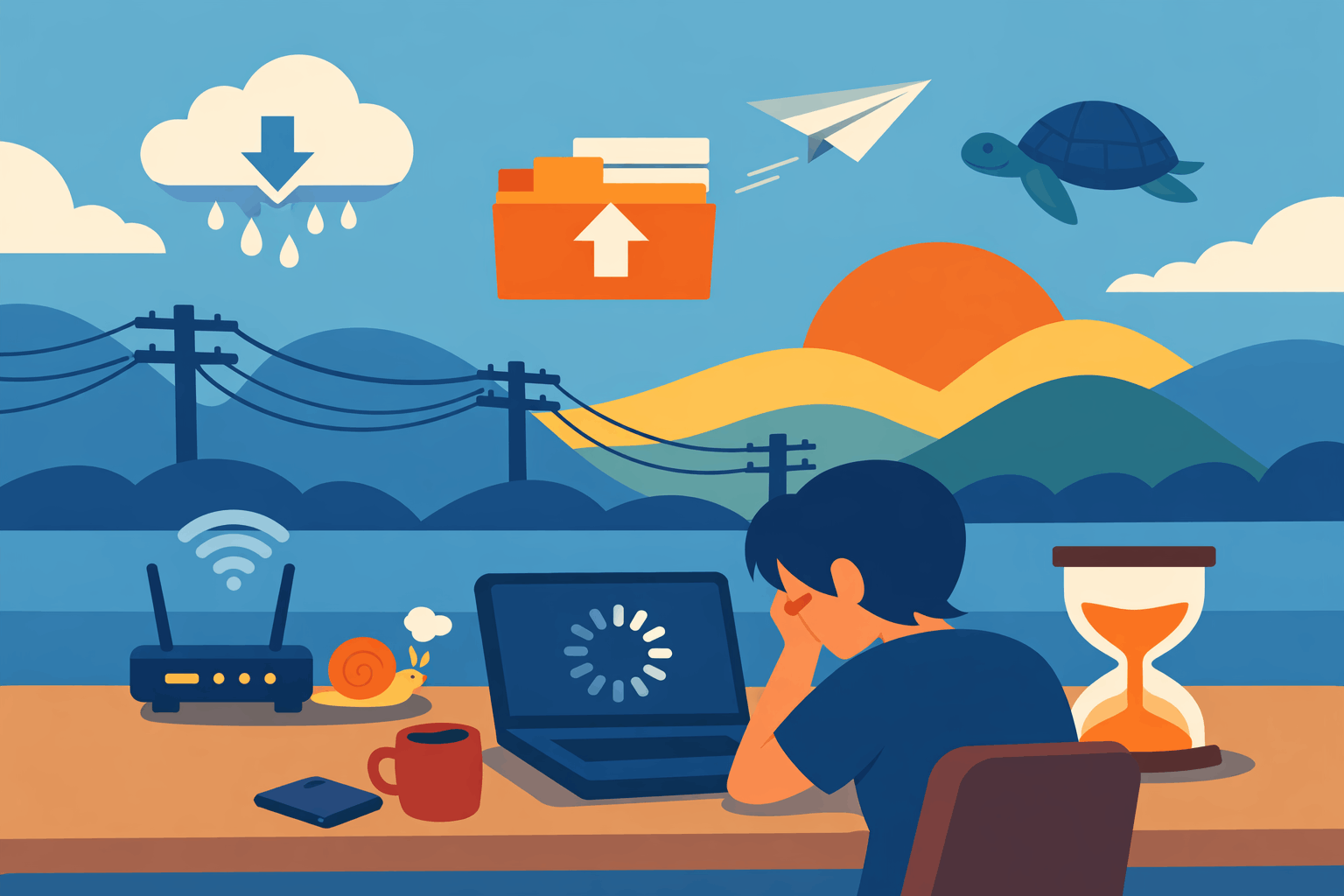
When most people talk about internet speed, they’re usually talking about download speed—how fast you can stream Netflix, scroll through TikTok, or download a file. But there’s another half of the equation that often gets ignored: upload speed.
For years, upload speed was the quiet, overlooked sibling in the internet family. Most of us didn’t think much about it, and internet providers didn’t really emphasize it either. After all, we were mostly consuming data, not sending it. But that’s changed—dramatically.
Today, whether you’re working remotely, streaming, gaming, or simply living in a connected home, upload speed matters more than ever. Let’s talk about why.
What Exactly Is Upload Speed?
Let’s start simple.
Download speed measures how fast information travels from the internet to you—things like watching a video, loading a webpage, or downloading a document.
Upload speed measures how fast data travels from you to the internet. That’s things like sending an email attachment, uploading a photo, live-streaming on Twitch, backing up files to the cloud, or video calling your boss on Zoom.
For a long time, the internet was mostly about downloading. We watched videos, browsed websites, and streamed music. But the way we use the internet has evolved—now we’re constantly uploading, whether we realize it or not.
The World Has Changed — and Upload Speed Now Drives It
Here’s the truth: we live in a two-way internet world. We don’t just watch content anymore—we create it, share it, and broadcast it. And that shift means upload speed suddenly plays a huge role in everyday life.
Let’s break it down.
Remote Work Runs on Upload Speed
Think about how work looks now. Whether you’re on Zoom, Google Meet, or Microsoft Teams, your voice and video feed are being sent (uploaded) to everyone else in real time. If your upload speed is weak, you’ll freeze mid-sentence, your voice will lag, and your colleagues will stare at that awkward frozen frame of you mid-blink.
Beyond meetings, remote work relies heavily on cloud tools like Google Drive, Dropbox, and Slack. Every time you upload a presentation, share large files, or sync your folders, your upload speed is doing the heavy lifting.
If your uploads crawl along, you’re wasting precious time—and patience.
Upload Speed Is the Secret Ingredient for Content Creators
If you create or share content online—YouTube videos, TikToks, Instagram Reels, or even high-res photos—upload speed can make or break your workflow.
Ever tried to upload a 4K video to YouTube on slow internet? It’s painful. A 10-minute video can take hours. That’s time you could be editing your next project or engaging with your audience.
And if you’re live streaming on Twitch or YouTube, it’s even more critical. Upload speed determines your stream quality, frame rate, and how smooth your broadcast looks. If your upload can’t keep up, viewers will see lag, pixelation, or dropped streams—things that kill engagement fast.
In short: download speed entertains you; upload speed empowers you.
Gamers, Listen Up: Upload Speed Can Make or Break Your Match
If you play online games, you’ve probably blamed “lag” for a lost match at least once. And while ping and latency are often the main culprits, poor upload speed plays a big part too.
When you’re gaming online, your device constantly sends information—your movements, actions, and chat—to the game server. If your upload speed can’t keep up, those actions are delayed. In fast-paced games, a split-second delay can mean the difference between victory and defeat.
And if you’re streaming your gameplay to Twitch or YouTube, upload speed becomes even more essential. Without a strong upload connection, your stream will buffer, drop frames, or freeze entirely.
Cloud Backups and File Transfers Depend on It
Nowadays, we store everything in the cloud—photos, documents, videos, backups. It’s convenient and safe, but it also means we’re constantly sending data up to the internet.
If your upload speed is slow, cloud backups can take forever or fail midway. Large files might take all night to upload. Businesses can’t afford that kind of delay—and neither can most of us.
When upload speed is high, backups run in the background smoothly. When it’s low, your devices struggle to stay in sync.
So, What Counts as a “Good” Upload Speed?
Good question—and the answer depends on what you do online.
- Basic browsing and emails – 5 to 10 Mbps is usually fine.
- HD video calls and remote work – aim for at least 20 Mbps.
- Live streaming, content creation, or heavy uploads – go for 50 Mbps or higher.
- Professional creators or businesses – symmetrical speeds (same upload and download) are ideal, which you’ll usually get with fiber internet.
If your upload speed is under 10 Mbps and multiple people in your household are working, gaming, or streaming, you’ll start feeling the strain.
The Real Consequences of Slow Upload Speeds
It’s not just about numbers. A poor upload connection can seriously affect your daily life—and not in small ways.
Here’s what that might look like:
- Your video calls freeze right when you’re making a point.
- Your Twitch stream drops frames, and your followers complain about lag.
- Your Google Drive uploads crawl, making collaboration painful.
- Your backups never finish, putting your data at risk.
These frustrations add up—and they all come down to one thing: a bottlenecked upload connection.
How to Check and Improve Your Upload Speed
The good news? You can test and improve it pretty easily.
1. Run a Speed Test
Run a speed test and look at your upload speed number. If it’s below 10 Mbps and you’re a heavy user, you probably need an upgrade.
2. Know What You Actually Need
If you mostly browse and stream, you’re fine with modest speeds. But if you upload videos, work remotely, or share large files, you’ll benefit from faster uploads.
3. Talk to Your ISP
Many ISPs advertise their download speeds in big bold letters—but their upload numbers are hidden in fine print. Ask your provider about symmetrical speeds or fiber options. Fiber internet usually gives you equal upload and download speeds, which is a huge upgrade.
4. Optimize Your Network
Sometimes, the issue isn’t your plan—it’s your setup. stop background apps from hogging upload bandwidth (like cloud syncs or auto-backups during work hours).
5. Upgrade if You Need To
If your work or hobbies rely on consistent uploads, upgrading your plan (or switching providers) is worth every penny. You’ll save time, frustration, and maybe even your reputation on that next big Zoom call.
Why Upload Speed Will Matter Even More in the Future
Here’s the big picture: upload speed isn’t just important now—it’s going to be essential in the near future.
Here’s why:
- Remote and hybrid work aren’t going anywhere.
- Cloud storage and collaboration tools are now standard.
- Content creation is booming—everyone’s a creator.
- Virtual and augmented reality are emerging, both of which demand lightning-fast, low-latency uploads.
We’re entering an age where the internet is no longer one-way. It’s a two-way conversation, and that means the ability to send data is just as critical as receiving it.
The Bottom Line
If you’ve been frustrated by laggy calls, frozen streams, or slow uploads, the culprit probably isn’t your computer—it’s your upload speed.
We’ve spent years focused on download speeds because we were mostly consuming data. But the world has flipped. Now, we’re creators, streamers, collaborators, remote workers, and smart-home owners. Upload speed has quietly become the backbone of our digital lives.
Related Posts
 Technology
Wifi
mobile phone plans
Technology
Wifi
mobile phone plans
What Is a Mobile Hotspot and How Does It Work?
A mobile hotspot is a portable feature or device that converts a cellular data connection (like 4G LTE or 5G) into a private Wi-Fi network
 Broadband Deals
cable deal
Broadband Deals
cable deal
Xfinity Cable Package Deals That Actually Deliver Value
Discover the best Xfinity cable package deals, compare internet and TV bundles, understand pricing, and choose the right plan for your home and budget.
 Broadband Deals
What Is TDS Internet and Is It Right for Your Home?
Learn what TDS Internet is, how it works, available plans, pricing, speeds, benefits, and how it compares with other internet providers.
 Internet Bundles
Bundle Internet, TV, and Phone Without Overpaying
Learn how to bundle internet, TV, and phone services for the best value. Compare plans, avoid hidden fees, and choose the right package for your home.
 Broadband Deals
cable deal
cheap internet deals
Broadband Deals
cable deal
cheap internet deals
Chicago Neighborhood Internet Guide for Better Connectivity
Explore internet options across Chicago neighborhoods, compare providers, understand speeds, costs, and find the best broadband solution.