Switch to Google DNS or OpenDNS to Speed Up Web Browsing Experience
If your internet service provider’s DNS servers are not the fastest around, it can probably slow down your internet. Web browser requires to look up every website’s IP you are browsing. To improve your browsing experience, here’s how to switch to either Google DNS or OpenDNS for faster loading speed.
Also, Read: 14 Free DNS Servers to check out in 2021
What is "Domain Name System"?
The Domain Name System delegates the responsibility of assigning domain names and mapping those names to Internet resources by designating authoritative name servers for each domain. Network administrators may delegate authority over sub-domains of their allocated name space to other name servers. This mechanism provides a distributed and fault-tolerant service and was designed to avoid a single large central database. – Source Wikipedia
Note: This trick works for Windows 7,8 and 10
How to Switch to Google DNS or OpenDNS?
1. “Open the Network and Sharing Center” by right-clicking the network status icon in the system tray.
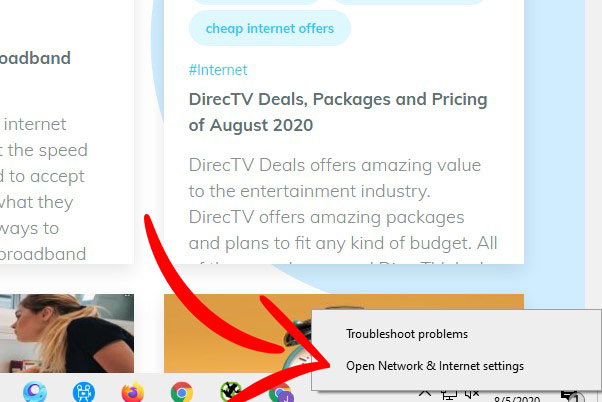
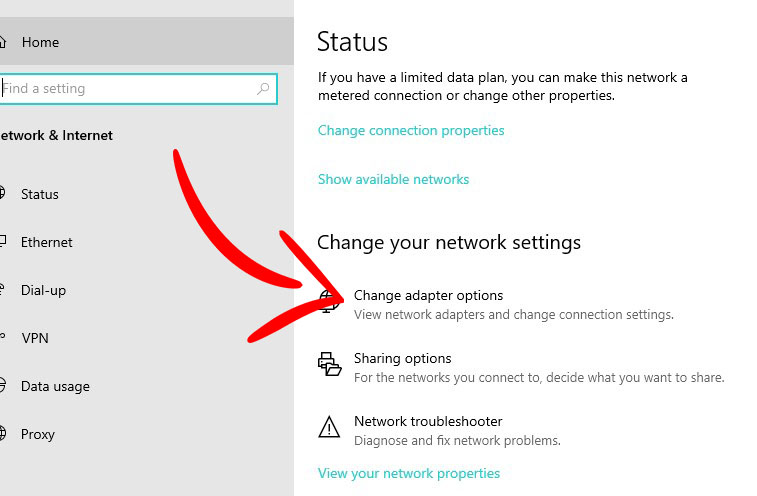
2. Click the “Change adapter settings” in the “Network and Sharing Center” window.
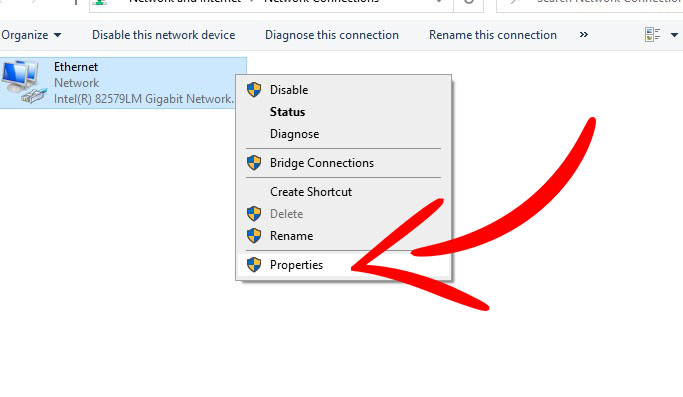
3. Right-click the connection type you want to switch to then right-click on “Properties“, for example, Ethernet or your Wifi under “Network Connections” window.
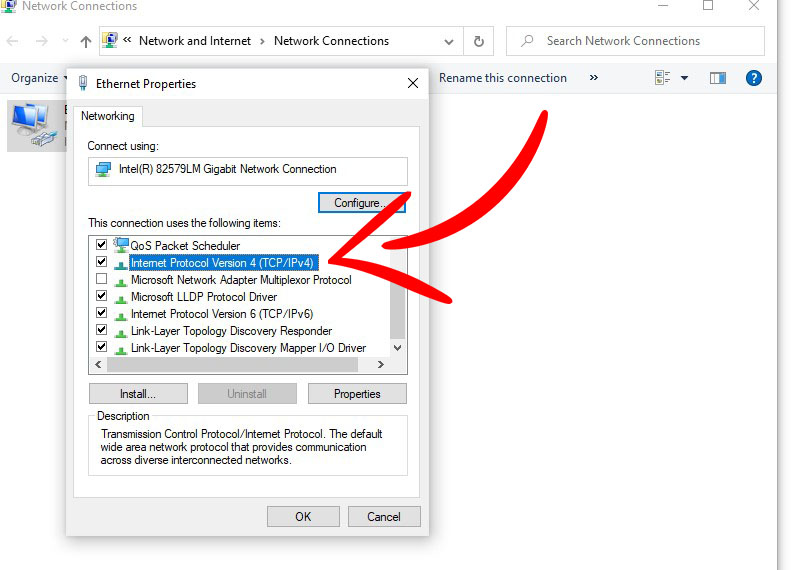
4. Select “Internet Protocol Version 4 (TCP / IPv4)” under the “Properties” window then click Properties.
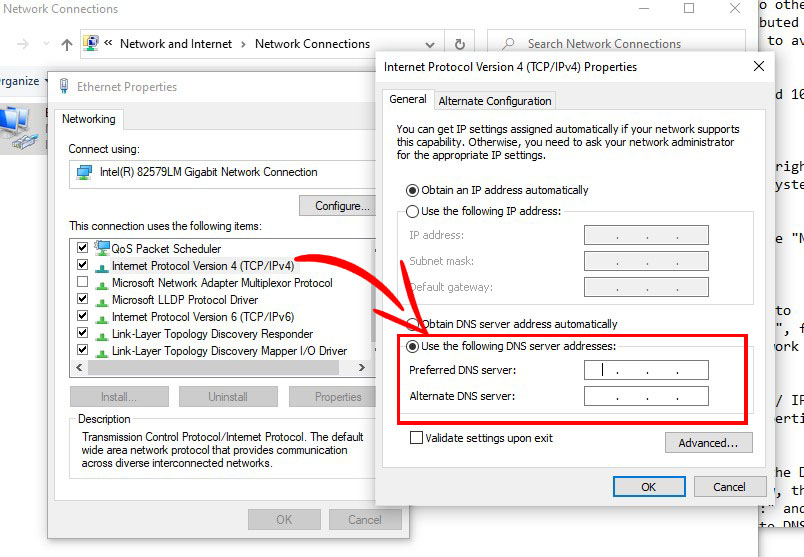
5. At this point, the screen will show you the DNS setting. At the bottom half of the window, thick “Use the following DNS server addresses:” and type the “Preferred DNS server” and “Alternate DNS server” listed below.
OpenDNS
Preferred: 208.67.222.222
Alternate: 208.67.220.220
Google DNS
Preferred: 8.8.8.8
Alternate: 8.8.4.4
You’re done! From this point, you will experience a more reliable DNS lookup and you should experience faster internet speed.
Related Posts
 Internet Bundles
Best Internet and YouTube TV Bundles for Streaming
Best Internet and YouTube TV Bundles for 2026
 Broadband Installation
cable deal
cheap internet offers
Broadband Installation
cable deal
cheap internet offers
Best Internet Providers for Smooth Online Gaming
Compare the best internet providers for gaming with low latency, fast speeds, and reliable performance for smoother online gameplay and streaming.
 Internet Bundles
Wifi
cheap internet deals
Internet Bundles
Wifi
cheap internet deals
How to Speed Up a Slow Internet Connection at Home
Learn practical ways to speed up a slow internet connection, improve Wi-Fi performance, reduce lag, and optimize your home network setup.
 cheap internet plans
Broadband Installation
cheap internet plans
Broadband Installation
How Fixed Wireless Helps You Skip Costly Setup Fees
fixed-wireless-lower-installation-costs
 Technology
cable deal
Technology
cable deal
Small Business WiFi Setup and Optimization Guide
Learn how to set up and optimize a small business WiFi network for better speed, security, and reliability with this complete step-by-step guide.