How to Use the Internet Effectively for Academic Success

Learn how to use the internet the smart way for academic research. Explore practical strategies, reliable sources, and expert tools to make your studies more accurate and efficient.
The internet has become one of the most powerful tools for learning and discovery. Whether you’re a high school student writing a term paper, a college researcher working on a thesis, or a professional studying industry trends, online resources give you access to an endless library of knowledge.
However, the challenge lies in knowing where to look, how to verify information, and how to use online data responsibly. This guide breaks down the steps you can take to make the most of the internet for serious academic research.
1. Define Your Research Topic and Keywords
Before diving into search engines or databases, start with a clear and specific research question. A well-defined topic keeps your research focused and makes it easier to find relevant results.
For example:
❌ “Pollution in cities” → Too broad.
✅ “Impact of air pollution on respiratory health in urban areas” → Specific and research-ready.
Pro Tip: Create a list of 5–10 keywords and related terms. Use variations of these keywords to explore more diverse sources. This approach improves search accuracy and helps uncover studies you might otherwise miss.
2. Choose Reliable Academic Sources
Not all websites are trustworthy. For credible academic work, focus on reputable databases and digital libraries. Some of the best include:
Google Scholar: Free academic search engine for research papers, theses, and scholarly articles.
JSTOR: Offers access to academic journals, primary sources, and eBooks across multiple fields.
PubMed: Specializes in life sciences and medical research.
ERIC (Education Resources Information Center): Ideal for education-related topics.
ResearchGate: A community of researchers sharing peer-reviewed work and discussions.
If you’re enrolled in a university, you likely have access to paid research databases through your library such as EBSCOhost, ProQuest, or ScienceDirect. These sources often provide the most reliable and up-to-date studies.
3. Master Smart Search Techniques
Typing random phrases into Google rarely leads to great academic results. Instead, use advanced search operators to refine your queries:
Quotation marks (“ ”): Find exact phrases.
Example: “climate change impact on agriculture”Site search (site:): Limit results to credible domains.
Example: renewable energy site:.eduMinus sign (-): Exclude unrelated results.
Example: jaguar -car -auto (for animal research)Filetype: Search for specific document formats.
Example: mental health report filetype:pdf
These tricks help filter out irrelevant or non-scholarly pages, saving you hours of scrolling.
4. Evaluate Credibility and Accuracy
Before citing a website or study, make sure it passes a quick credibility check:
Author or Institution: Is the content written by an expert, professor, or recognized organization?
Date: When was the article published or last updated? Academic research should be current and relevant.
Citations and References: Legitimate research cites other scholarly work.
Domain Type: Prioritize
.edu,.gov, or well-established.orgsites over commercial ones.
If you’re unsure, cross-check information from multiple reliable sources before including it in your paper.
5. Use Research Tools to Organize and Cite Sources
As you gather information, it’s easy to lose track of where you found what. Use reference management tools to stay organized and cite properly.
Popular tools include:
Zotero: A free tool that saves citations and PDFs directly from your browser.
Mendeley: Great for managing references and collaborating with classmates.
Google Docs Citation Tool: Ideal for quick references and automatic formatting.
Citing correctly not only prevents plagiarism but also strengthens your credibility as a researcher.
6. Verify Information and Avoid Bias
The internet can sometimes amplify misinformation. Always double-check statistics, data, and claims with official studies or government sources. For instance:
Use World Health Organization (WHO) or CDC for health data.
Use UN, World Bank, or OECD for global development information.
Use National Institutes of Health (NIH) for medical research.
When in doubt, look for peer-reviewed papers—they’re vetted by experts before publication.
7. Practice Ethical Research Habits
Academic integrity is more than just citing sources—it’s about using information responsibly. Always:
Paraphrase ideas in your own words instead of copying text directly.
Give full credit to original authors through proper citations.
Avoid using AI-generated or non-verified content as factual evidence.
Respect copyright and fair use guidelines.
Maintaining these habits protects you from plagiarism issues and builds trust in your academic work.
Final Thoughts
The internet offers incredible access to knowledge—but success depends on how effectively you use it. By combining smart search strategies, credible sources, and ethical practices, you can transform your research process from overwhelming to efficient.
Remember, good research isn’t about how much information you find—it’s about how well you filter, analyze, and present what truly matters.
Related Posts
 Technology
Wifi
mobile phone plans
Technology
Wifi
mobile phone plans
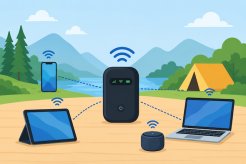
What Is a Mobile Hotspot and How Does It Work?
A mobile hotspot is a portable feature or device that converts a cellular data connection (like 4G LTE or 5G) into a private Wi-Fi network
 Broadband Deals
cable deal
Broadband Deals
cable deal
Xfinity Cable Package Deals That Actually Deliver Value
Discover the best Xfinity cable package deals, compare internet and TV bundles, understand pricing, and choose the right plan for your home and budget.
 Broadband Deals
What Is TDS Internet and Is It Right for Your Home?
Learn what TDS Internet is, how it works, available plans, pricing, speeds, benefits, and how it compares with other internet providers.
 Internet Bundles
Bundle Internet, TV, and Phone Without Overpaying
Learn how to bundle internet, TV, and phone services for the best value. Compare plans, avoid hidden fees, and choose the right package for your home.
 Broadband Deals
cable deal
cheap internet deals
Broadband Deals
cable deal
cheap internet deals
Chicago Neighborhood Internet Guide for Better Connectivity
Explore internet options across Chicago neighborhoods, compare providers, understand speeds, costs, and find the best broadband solution.