Spectrum vs Verizon 5G Home Internet: Which Is Better?
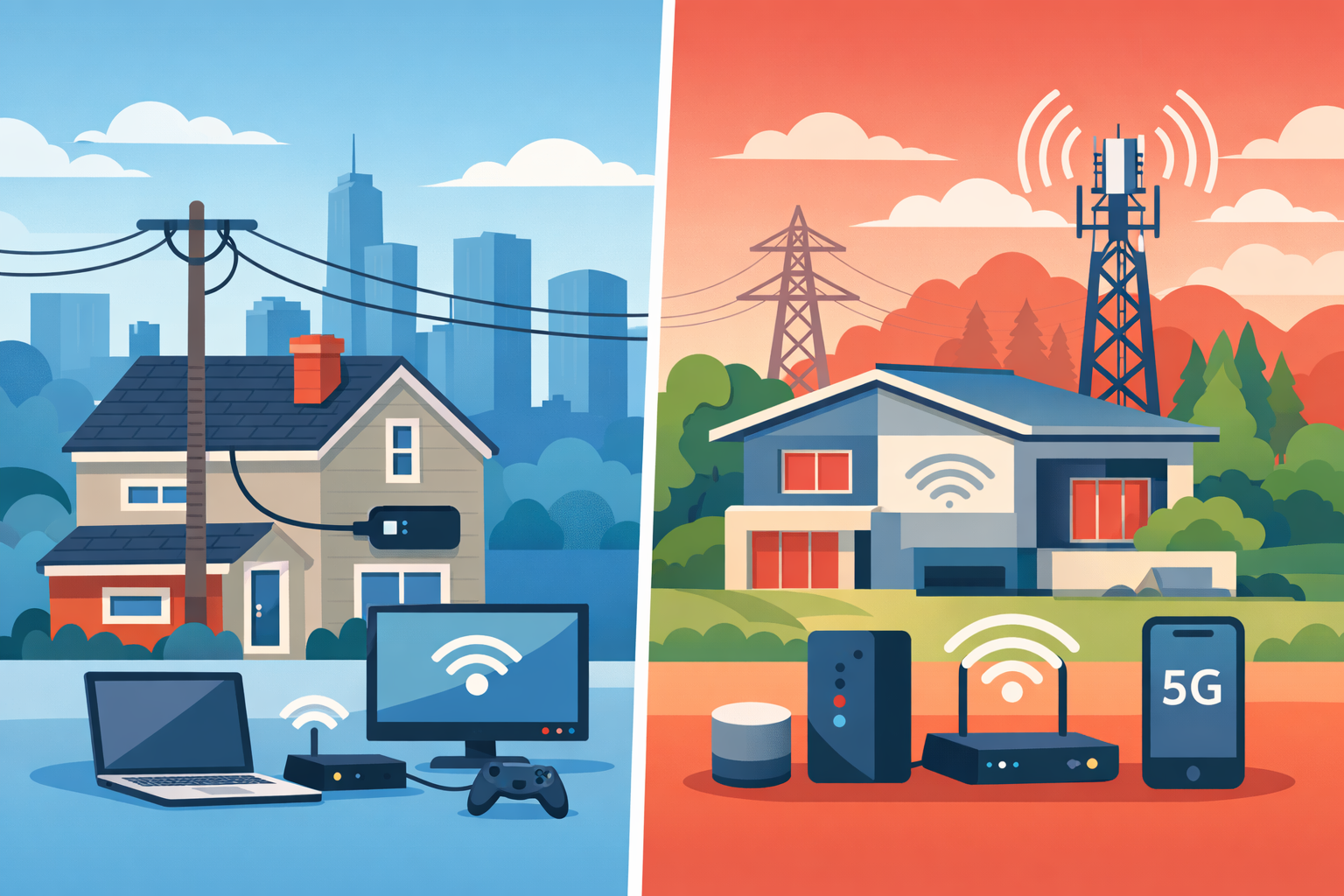
Choosing the right home internet provider in the United States can feel overwhelming. With so many options available—fiber, cable, and wireless—it’s easy to get lost comparing speeds, pricing, and reliability.
Two popular choices many households consider today are cable internet from Spectrum and wireless 5G home internet from Verizon. Both offer high-speed connections, competitive pricing, and nationwide availability, but they rely on very different technologies.
In this guide, we’ll compare Spectrum and Verizon 5G Home Internet across the factors that matter most: speed, reliability, pricing, availability, and overall value. By the end, you’ll have a clearer idea of which service fits your household best.
If you’re still unsure which providers operate in your area, a quick way to narrow your options is to use a check internet availability tool that lets you search by ZIP code.
Understanding Spectrum Internet
Spectrum is one of the largest cable internet providers in the United States, operating under Charter Communications. Its cable network delivers high-speed internet to millions of households across suburban and urban areas.
If you want to explore the provider in more detail, you can review Spectrum internet plans to see the different speed tiers and packages available.
How Spectrum Internet Works
Spectrum uses a cable-based network built on DOCSIS technology. That means internet signals travel through coaxial cables similar to those used for cable television.
Because cable infrastructure already exists in many communities, Spectrum can provide reliable internet to large numbers of households without installing entirely new networks.
Typical Spectrum Internet Speeds
Spectrum commonly offers several speed tiers, including:
300 Mbps for everyday households
500 Mbps for larger families
1 Gig for high-demand users
These speeds are well suited for:
Streaming in 4K
Online gaming
Remote work and video meetings
Smart home devices
Cable internet usually provides fast download speeds but slower upload speeds compared to fiber.
Key Advantages of Spectrum
Spectrum’s cable internet remains a popular option for several reasons.
Wide availability
Spectrum covers many cities and suburbs across the United States, making it easier to find service in areas where fiber isn’t available.
Consistent speeds
Cable networks typically offer stable performance for everyday activities like streaming and browsing.
No data caps
Spectrum does not impose strict monthly data limits, which is beneficial for households with heavy internet usage.
Understanding Verizon 5G Home Internet
Verizon takes a different approach to home internet by using wireless 5G technology instead of cables.
Rather than connecting through underground wires, Verizon delivers internet signals from nearby cellular towers directly to a receiver installed in your home.
You can explore available packages through Verizon wireless internet to see how their 5G home plans compare.
What Is 5G Home Internet?
5G home internet uses the same technology that powers modern mobile networks but optimized for home broadband.
If you want a deeper explanation of the technology, this guide on 5G internet technology explains why it’s becoming a major alternative to traditional broadband.
Instead of physical cables, the connection relies on wireless signals transmitted from nearby towers.
Typical Verizon 5G Speeds
Verizon’s 5G Home Internet typically delivers speeds ranging from:
85 Mbps to 300 Mbps for standard 5G home plans
Up to 1 Gbps in select Ultra Wideband coverage areas
Actual speeds vary depending on:
Distance from the tower
Network congestion
Physical obstacles like buildings
Key Advantages of Verizon 5G Home Internet
Wireless home internet offers several unique benefits.
Quick setup
Installation is often simple. Many customers receive a self-install kit and can be online within minutes.
No contracts
Many plans are month-to-month without long-term commitments.
Competitive pricing
Wireless home internet plans are often cheaper than cable or fiber alternatives.
Spectrum vs Verizon 5G: Technology Comparison
Understanding the technology behind each service helps explain how they perform in real-world conditions.
| Feature | Spectrum Cable Internet | Verizon 5G Home Internet |
|---|---|---|
| Connection Type | Coaxial cable | Wireless cellular |
| Installation | Professional or self-install | Self-install |
| Infrastructure | Wired cable network | Cellular towers |
| Latency | Generally stable | Can vary depending on signal |
| Upload Speed | Moderate | Often similar to download speeds |
Cable internet tends to provide more consistent performance, while 5G offers flexibility and faster deployment.
Speed Comparison
Speed is one of the most important factors when choosing an internet provider.
Spectrum Speed Performance
Spectrum’s cable plans commonly offer:
300 Mbps standard plans
500 Mbps mid-tier plans
Gigabit speeds for power users
These speeds work well for households with multiple connected devices.
Verizon 5G Speed Performance
Verizon’s 5G speeds depend heavily on network coverage.
In strong coverage zones, customers may see speeds comparable to cable internet. However, in weaker areas, speeds can fluctuate.
Which One Is Faster?
In many locations, Spectrum’s cable service provides more consistent speeds. However, Verizon’s 5G network can outperform cable in areas with strong Ultra Wideband coverage.
Reliability and Stability
Reliability matters just as much as speed, especially for remote work or streaming.
Spectrum Reliability
Because Spectrum uses wired infrastructure, the connection tends to be more stable.
Cable networks are less affected by:
Weather conditions
Physical interference
Tower congestion
Verizon 5G Reliability
Wireless connections depend on signal strength and network capacity.
Factors that may affect performance include:
Distance from towers
Physical barriers
Network traffic during peak hours
While many customers report strong performance, wireless internet can occasionally experience fluctuations.
Pricing Comparison
Cost is often a deciding factor when choosing between internet providers.
Spectrum Pricing
Spectrum plans typically fall into a mid-range price category.
Advantages include:
No contracts
No data caps
Bundling options with TV and mobile services
However, prices may increase after promotional periods.
Verizon 5G Pricing
Verizon’s 5G Home Internet is usually priced competitively.
Benefits include:
Lower monthly cost in many areas
Discounts for Verizon mobile customers
Free equipment in many plans
Wireless plans may provide better value for smaller households with moderate internet needs.
Availability in the United States
Availability varies widely depending on location.
Spectrum Coverage
Spectrum serves millions of households across:
Major cities
Suburban neighborhoods
Smaller towns
Because cable infrastructure has existed for decades, it reaches a large portion of the country.
Verizon 5G Coverage
Verizon’s 5G network is expanding quickly but still focuses on:
Urban areas
High-density suburbs
Some rural areas may not yet have 5G home coverage.
Checking providers by ZIP code can help determine which service is available at your address.
Best Choice for Different Types of Users
The right provider often depends on how your household uses the internet.
Best for Streaming Families
Spectrum is often the better choice for families with heavy streaming usage due to its stable speeds and unlimited data.
Best for Budget-Friendly Internet
Verizon 5G Home Internet may be more affordable, especially for customers already using Verizon mobile plans.
Best for Remote Work
Cable internet tends to offer more consistent performance for video calls and work-related applications.
Best for Quick Setup
Verizon 5G stands out for fast installation since it does not require cable lines.
When Verizon 5G Might Be the Better Choice
Wireless home internet works especially well in certain scenarios.
Apartments where running cables is difficult
Temporary housing situations
Homes in areas with strong 5G coverage
People looking for simple plug-and-play installation
When Spectrum Might Be the Better Choice
Cable internet often remains the safer option for households needing consistent performance.
Large families with many devices
Heavy streaming or gaming users
Remote workers needing stable connections
Homes without strong 5G coverage
Final Thoughts
Both Spectrum and Verizon 5G Home Internet offer solid options for U.S. households, but they serve different needs.
Spectrum’s cable network delivers dependable speeds and broad availability, making it a strong choice for families and heavy internet users.
Verizon’s 5G home service represents a newer approach that prioritizes convenience, flexible pricing, and wireless connectivity.
The best option ultimately depends on your location, internet usage, and budget. Checking what providers operate in your area is often the first step toward making the right decision.
Related Posts
 Safety
What Not to Do And Internet Safety Tips To Protect You Online
Learn what not to do online and discover practical internet safety tips to protect your personal data, devices, and accounts from cyber threats.
 cheap internet deals
Cheap Internet Plans in Florida: Find the Right Fit Fast
Discover how to find cheap internet plans in Florida based on your lifestyle, location, and speed needs. Compare providers and choose the best plan today.
 cheap internet deals
Cheap Internet Plans vs Premium Plans
Cheap vs premium internet plans explained. Learn the key differences in speed, data limits, reliability, and pricing to choose the best plan for your home.
 Internet Bundles
How to Get Free or Cheap Internet in the U.S.
Learn how to get free or discounted internet in the U.S. Discover government programs, provider discounts, and practical ways to lower your monthly bill.
 Broadband Installation
Technology
Wifi
Broadband Installation
Technology
Wifi
Why Your Internet Speed Test Results Are Different
Discover why internet speed test results can vary and what factors affect your connection performance, from Wi-Fi interference to network congestion.