15 Intriguing Facts About the Internet You’ll Love
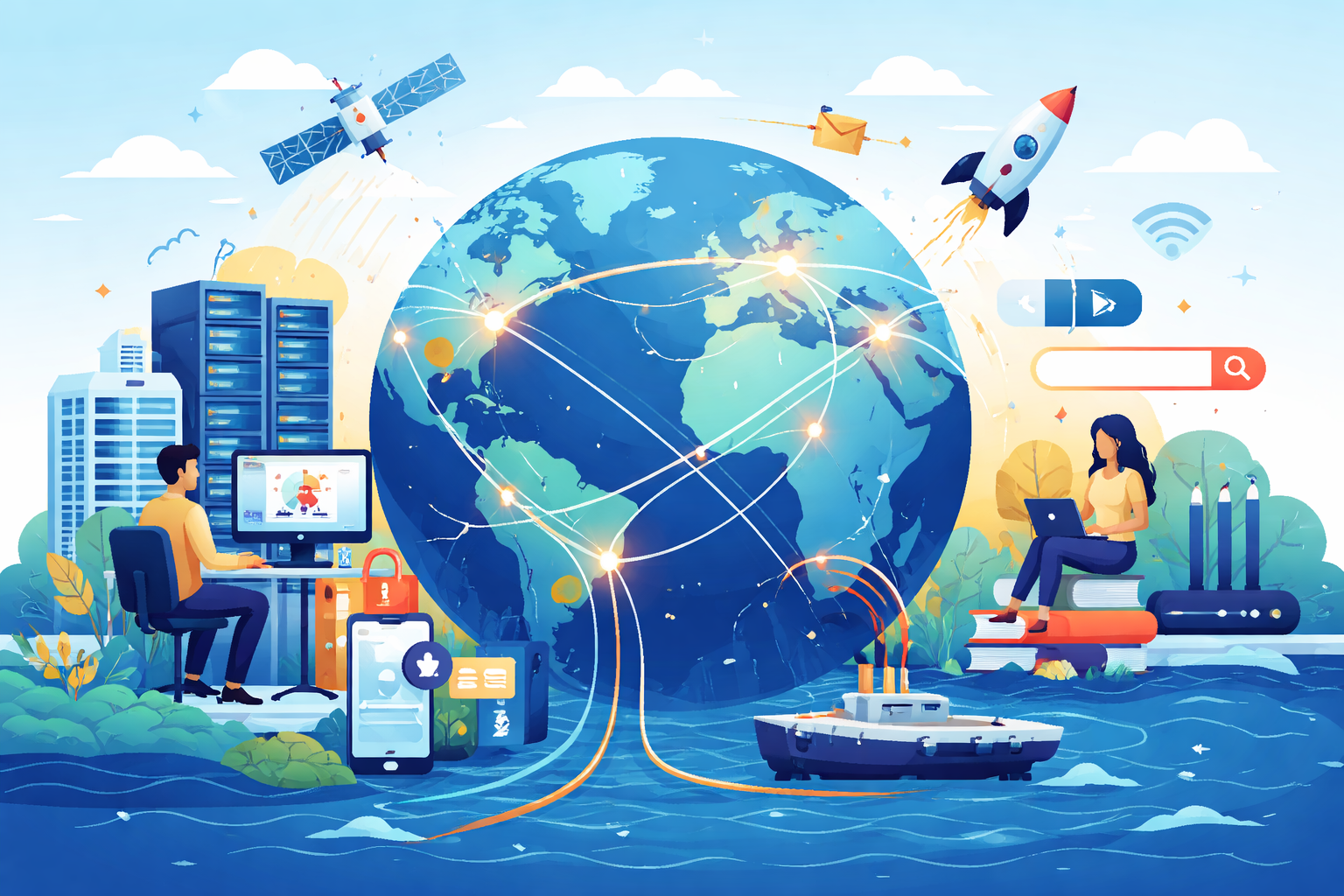
The internet is woven into nearly every part of modern life. From remote work and online banking to streaming movies and running entire businesses, we rely on it more than ever. But how much do you really know about the network powering your daily routines?
Behind every search, video call, and social media post is a massive, constantly evolving infrastructure. In this guide, we’ll explore intriguing facts about the internet — from its surprising origins to the way it moves data across oceans — and explain how these insights can help you make smarter decisions about your connection.
The Internet Wasn’t Built for the Public
Most people assume the internet was designed from the start for mass communication. It wasn’t.
It Began as a Military Project
The internet traces back to ARPANET, a U.S. Department of Defense project launched in the late 1960s. The goal wasn’t social networking or entertainment — it was secure communication between research institutions in case of disruption.
In 1969, the first message was sent between two computers. It was supposed to say “LOGIN.” The system crashed after the first two letters. The first internet message ever sent was simply: “LO.”
Not exactly glamorous — but revolutionary.
It Became Public Decades Later
The World Wide Web, which most people think of as “the internet,” wasn’t introduced until 1989 by Tim Berners-Lee. It allowed users to access and share information through websites and hyperlinks.
The infrastructure existed long before the public ever saw it.
The Internet Is Mostly Underwater
It’s easy to imagine the internet floating invisibly through satellites. In reality, more than 95% of global internet traffic travels through physical cables on the ocean floor.
Submarine Cables Span the Globe
These fiber-optic cables connect continents and stretch for thousands of miles beneath the sea. They transmit data at near-light speed using pulses of light.
When you send an email or stream a show from another country, your data likely travels through underwater cables before reaching its destination.
This physical backbone is why internet outages can sometimes be traced to damaged cables caused by earthquakes or ship anchors.
There Are Billions of Websites — But Most Are Inactive
The number of websites worldwide exceeds 1.1 billion. However, only a fraction are actively maintained.
Many domains are parked, abandoned, or no longer updated. This means that although the web appears endless, active, regularly updated websites represent a much smaller ecosystem.
For businesses and bloggers, this presents an opportunity: high-quality, well-maintained content stands out more than ever.
Internet Speed Has Increased Dramatically
In the early days, internet speeds were measured in kilobits per second. Today, gigabit connections are increasingly common in urban areas.
Dial-Up vs. Fiber
Dial-up connections in the 1990s operated at a maximum of 56 Kbps. Downloading a single song could take hours.
Modern fiber connections can reach 1 Gbps or more — meaning entire high-definition movies can download in seconds.
If you’re unsure how your connection performs today, running an accurate online speed test can help you see your real-time download, upload, and latency metrics.
Understanding your speed isn’t just about curiosity. It directly impacts streaming quality, gaming responsiveness, and video call stability.
Internet Usage Varies by Household Behavior
Not every household needs the same internet speed.
Streaming, Gaming, and Remote Work Change Everything
A single user browsing websites requires far less bandwidth than a family streaming 4K content on multiple devices while working remotely.
That’s where an internet speed becomes useful. It helps match your household’s activity level with an appropriate plan, preventing overpaying for unused bandwidth.
Choosing the right speed tier isn’t about getting the fastest plan available — it’s about getting the right one.
Data Consumption Is Higher Than You Think
Many users underestimate how much data they use monthly.
Video Streaming Drives Usage
Streaming in standard definition uses around 1 GB per hour. In 4K, that number can jump to 7 GB per hour or more.
Online gaming downloads, cloud backups, and software updates add to that total quickly.
If you’re concerned about hitting data caps, a data usage calculator can estimate how much bandwidth your household consumes based on daily activities.
This becomes especially important for families with multiple smart devices connected 24/7.
The Internet Never Sleeps
At any given second:
Millions of emails are sent
Thousands of Google searches are performed
Hundreds of hours of video are uploaded
Financial transactions are processed worldwide
The internet operates continuously, across time zones and continents.
This constant activity requires massive data centers — some the size of warehouses — running around the clock to process information.
Cybersecurity Threats Are Constant
The same openness that makes the internet powerful also makes it vulnerable.
Billions of Records Are Exposed Annually
Cyberattacks, phishing attempts, and malware infections occur daily. Businesses and individuals alike are targets.
Strong passwords, two-factor authentication, secure Wi-Fi configurations, and updated software are no longer optional — they are basic necessities.
As internet usage grows, so does the importance of digital literacy.
Search Engines Index Only a Portion of the Web
The visible internet — what search engines index — is just the surface.
The Deep Web and Dark Web
The deep web includes password-protected pages like banking portals, private databases, and subscription content. It is much larger than the publicly indexed web.
The dark web is a small subset requiring special software to access.
While often misunderstood, most of the deep web simply consists of private, secure data — not hidden criminal networks.
Internet Infrastructure Is Energy Intensive
Data centers consume significant electricity to power servers and cooling systems.
Tech companies increasingly invest in renewable energy and efficiency improvements to reduce their carbon footprint.
As cloud computing expands, energy optimization becomes a major global focus.
Social Media Has Reshaped Communication
Before the internet, communication was slower and more localized.
Today, platforms allow real-time global interaction. News spreads within minutes. Businesses can reach international audiences instantly.
This transformation has changed politics, marketing, education, and personal relationships.
The Internet Supports the Global Economy
E-commerce generates trillions of dollars annually.
Small businesses can operate entirely online without physical storefronts. Remote freelancers collaborate with clients across continents.
Entire industries — app development, digital marketing, cloud services — exist solely because of internet infrastructure.
Internet Reliability Depends on Multiple Factors
Your internet experience isn’t determined solely by advertised speed.
Latency and Network Congestion
Latency (ping) measures how quickly data travels between your device and a server. Low latency is crucial for gaming and video conferencing.
Network congestion during peak hours can reduce performance, even on high-speed plans.
Testing your connection periodically ensures you’re receiving the service you pay for.
Wi-Fi and the Internet Are Not the Same
Many people use these terms interchangeably.
The internet is the global network of networks. Wi-Fi is simply a wireless method for connecting devices to a local router.
If your connection feels slow, the issue may be your router placement or outdated hardware — not your service plan.
The Internet Continues to Evolve
Emerging technologies like 5G, satellite internet, and edge computing aim to improve speed and accessibility.
Rural communities are gaining connectivity through new infrastructure projects. Smart homes and IoT devices are expanding rapidly.
The internet today looks nothing like it did 20 years ago — and it will continue to transform how we live and work.
Why These Facts Matter for Everyday Users
Understanding how the internet works empowers you to:
Choose the right speed plan
Monitor data consumption
Protect your privacy
Troubleshoot connectivity issues
Avoid overpaying for unnecessary upgrades
The internet isn’t just a utility — it’s critical infrastructure in modern life. The more informed you are, the better decisions you can make about your connection.
Final Thoughts
The internet began as a government experiment and evolved into the backbone of global communication and commerce. It runs beneath oceans, powers entire economies, and connects billions of people in real time.
From submarine cables to streaming data demands, these intriguing facts highlight how complex — and fascinating — the internet truly is.
Whether you’re working from home, running a business, or streaming your favorite show, understanding the technology behind it all gives you a practical advantage.
Related Posts
 Safety
What Not to Do And Internet Safety Tips To Protect You Online
Learn what not to do online and discover practical internet safety tips to protect your personal data, devices, and accounts from cyber threats.
 cheap internet deals
Cheap Internet Plans in Florida: Find the Right Fit Fast
Discover how to find cheap internet plans in Florida based on your lifestyle, location, and speed needs. Compare providers and choose the best plan today.
 cheap internet deals
Cheap Internet Plans vs Premium Plans
Cheap vs premium internet plans explained. Learn the key differences in speed, data limits, reliability, and pricing to choose the best plan for your home.
 Subscription
cheap internet offers
Subscription
cheap internet offers
Spectrum vs Verizon 5G Home Internet: Which Is Better?
Spectrum vs Verizon 5G Home Internet: compare speed, pricing, reliability, and availability to choose the best home internet provider for your household.
 Internet Bundles
How to Get Free or Cheap Internet in the U.S.
Learn how to get free or discounted internet in the U.S. Discover government programs, provider discounts, and practical ways to lower your monthly bill.