Hughesnet Satellite Internet Review: Plans, Pricing, Speed
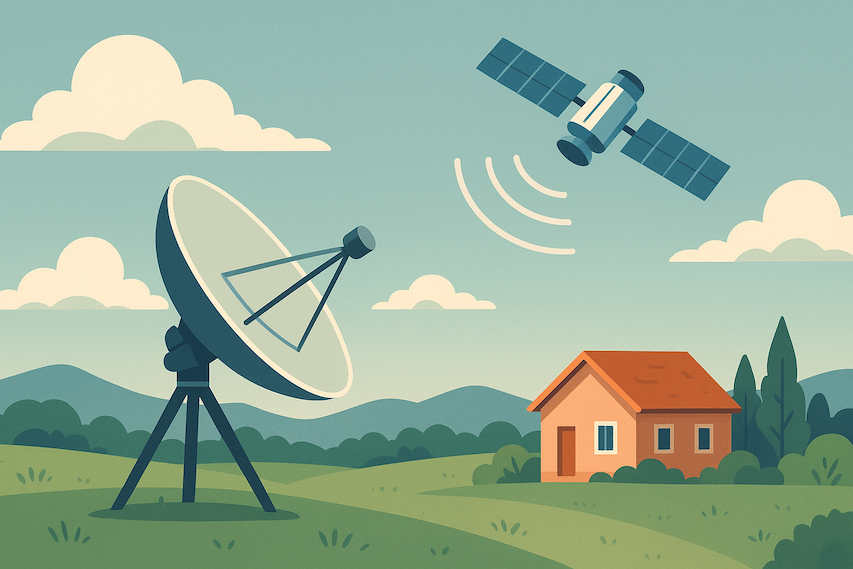
HughesNet now runs on an advanced satellite network powered by the JUPITER system. Their latest offerings deliver download speeds up to 100 Mbps — a significant improvement compared to older satellite‑internet standards.
All plans include built‑in Wi‑Fi (Wi‑Fi 6 in most newer plans) and, optionally, a mesh‑WiFi setup to extend coverage throughout your home.
HughesNet aims to bring reliable internet to homes and communities that have limited or no access to cable or fiber — especially rural or remote locations.
Speeds, Data, and Plan Structure
Fast Speeds, But Vary by Plan
Current HughesNet plans advertise up to 100 Mbps download and up to 5 Mbps upload, depending on plan and location.
Latency is still higher compared to fiber or cable, but upgrade paths — especially hybrid plans — aim to reduce latency where possible.
Data: Priority + Unlimited Standard Data
Rather than fixed “hard caps,” HughesNet now offers a hybrid data model:
- Each plan gives a certain amount of Priority Data per billing cycle (e.g., 100 GB or 200 GB depending on plan). When you are using Priority Data, you get full advertised speeds.
- After Priority Data is used up, you don’t get cut off or charged overage fees. Instead, the service transitions to unlimited “Standard Data.” Speeds under Standard Data are reduced, especially during high-traffic periods.
- Users who need more high-speed data can purchase extra Priority Data via “Data Tokens.”
In short: your internet stays on permanently, but “full speed” data is limited each month.
Plan Examples (may vary by area)
HughesNet Plans:
- Select
- Typical Promo Price: ~$49.99/mo
- Download Speed (up to): 50 Mbps
- Priority Data (per billing cycle): ~100 GB
- Elite
- Typical Promo Price: ~$64.99/mo
- Download Speed (up to): 100 Mbps
- Priority Data (per billing cycle): ~200 GB
- Fusion
- Typical Promo Price: ~$94.99/mo
- Download Speed (up to): 100 Mbps (satellite + wireless)
- Priority Data (per billing cycle): ~200 GB
View All Plans
*Promo price for first 12 months (or depending on promotion/region); regular rates may be higher afterward.
There is also a basic “Lite”‑type plan in some areas for minimal use, which may offer lower speed/data — but availability depends on region.
What’s New — and What Works Better Now
Better Speeds + Flexible Data
Thanks to improved satellite technology and the JUPITER backbone, HughesNet now delivers speeds and plan flexibility unlikely in older satellite ISPs. Up to 100 Mbps download is a big upgrade.
The “Priority Data + unlimited Standard Data” model solves the problem of hard data caps: you won’t be cut off mid-month. Instead, after your high-speed allotment is used up, you just have slower — but continuous — internet.
Optional Extras: Wi‑Fi Upgrades & Hybrid Fusion Plan
All plans include a modem with built‑in Wi‑Fi (Wi‑Fi 6 in newer plans). For larger homes or many devices, you can add mesh Wi‑Fi nodes to eliminate dead zones.
If you care about latency — for video calls, light gaming, or more responsive browsing — the Fusion plan combines satellite + wireless (where available) to reduce delay and improve reliability.
Broad Coverage — Especially in Rural Areas
HughesNet continues to focus on areas underserved by cable or fiber. Because it uses satellite, it can serve regions where laying cables is impractical.
That makes it one of the few viable “broadband” options for remote homes, rural towns, or areas with limited infrastructure.
What You Should Know: Limitations & Realistic Expectations
Speeds Vary, and “Up to 100 Mbps” Is Not Guaranteed
As with all satellite internet, actual performance depends on location, weather, number of devices, and network congestion. The “up to” speed is the theoretical maximum.
Once your Priority Data runs out, Standard Data kicks in — but speeds may drop significantly, especially if multiple people are online at once.
Not Ideal for Heavy Streaming, Large Downloads, or Gaming Marathons
If you stream a lot (especially high-definition or 4K), download large files, or play high‑bandwidth online games frequently, you might burn through Priority Data fast. Extended heavy usage might lead to slower Standard Data speeds most of the month.
Even with the Fusion plan’s improved latency, many users note that satellite (or hybrid satellite + wireless) still may not match fiber or cable for real-time multiplayer gaming or very time-sensitive applications.
Availability Varies by Address
Not all HughesNet features (especially Fusion or Wi‑Fi‑mesh bundle) are available everywhere. Before you sign up, it’s important to check whether your exact address is serviceable.
Who Should Consider HughesNet — and Who Should Think Twice
Good Fit For:
- Homes in rural or remote areas with no access to cable or fiber
- Households needing reliable connectivity for browsing, email, social media, online classes, light streaming, or moderate usage
- People who want a “set and forget” internet solution with unlimited standard data and predictable billing
- Families or users who want a simple, all‑in‑one package (internet + optional extras like mesh Wi‑Fi or hybrid connectivity)
Maybe Skip or Use With Caution If You:
- Do a lot of 4K streaming, heavy downloads, or constant high‑data use
- Need very low latency for competitive gaming or real‑time interactive applications
- Expect “fiber‑like” performance (consistently high speed and low lag)
- Live in an area where advanced features (Fusion, mesh Wi‑Fi) are not supported
HughesNet Is Worth Considering ?
HughesNet remains one of the most viable internet solutions for rural and underserved areas — and with recent upgrades, it’s much more capable than older satellite options. The combination of improved speeds, Priority + unlimited Standard Data, built-in Wi‑Fi, and optional extras give flexibility and reliability.
Related Posts
 Safety
What Not to Do And Internet Safety Tips To Protect You Online
Learn what not to do online and discover practical internet safety tips to protect your personal data, devices, and accounts from cyber threats.
 cheap internet deals
Cheap Internet Plans in Florida: Find the Right Fit Fast
Discover how to find cheap internet plans in Florida based on your lifestyle, location, and speed needs. Compare providers and choose the best plan today.
 cheap internet deals
Cheap Internet Plans vs Premium Plans
Cheap vs premium internet plans explained. Learn the key differences in speed, data limits, reliability, and pricing to choose the best plan for your home.
 Subscription
cheap internet offers
Subscription
cheap internet offers
Spectrum vs Verizon 5G Home Internet: Which Is Better?
Spectrum vs Verizon 5G Home Internet: compare speed, pricing, reliability, and availability to choose the best home internet provider for your household.
 Internet Bundles
How to Get Free or Cheap Internet in the U.S.
Learn how to get free or discounted internet in the U.S. Discover government programs, provider discounts, and practical ways to lower your monthly bill.