Fiber Internet vs. Cable Internet: Which One Fits Your Home?
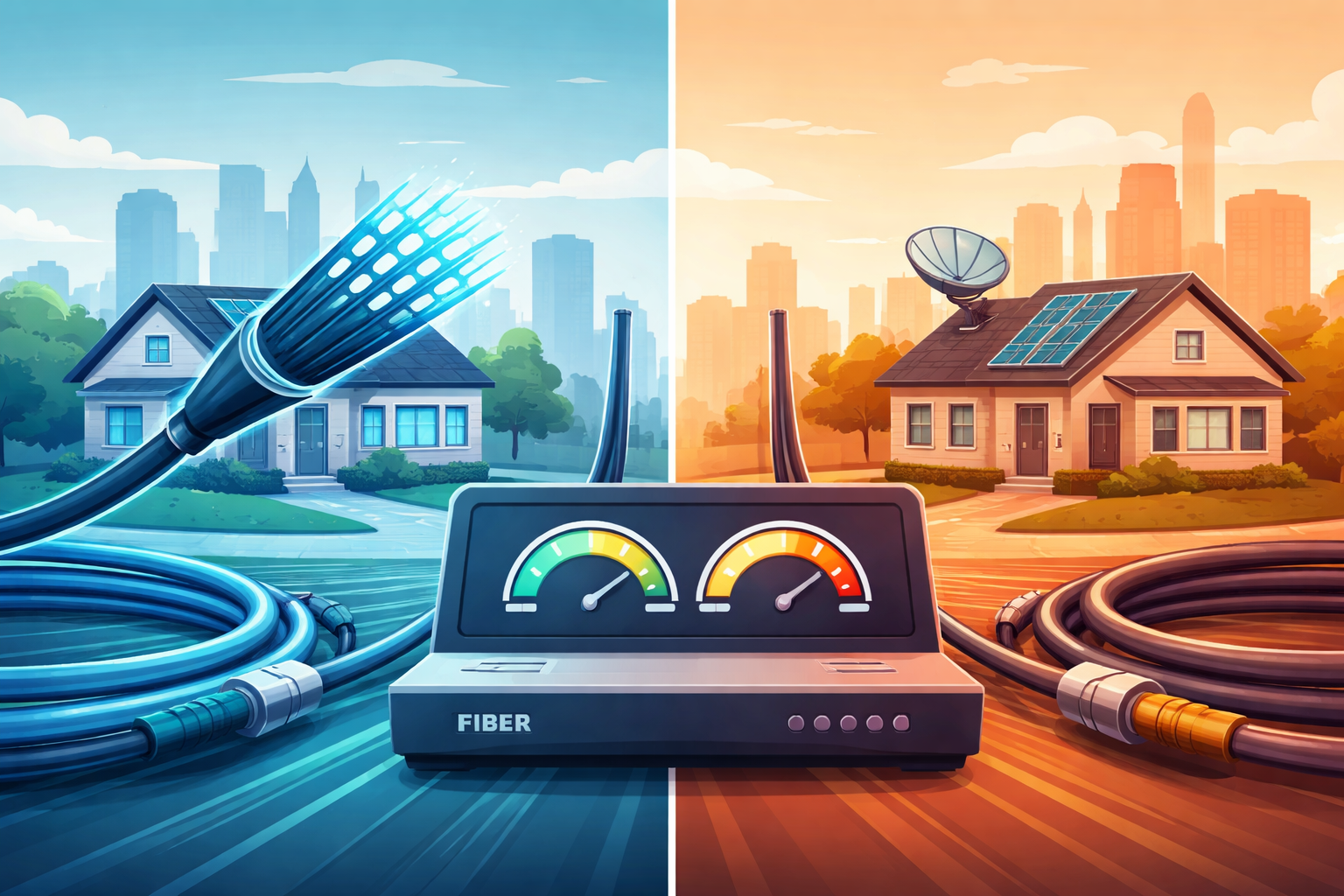
Choosing an internet connection for your home isn’t as simple as it used to be. With more devices online, higher streaming quality, and remote work becoming the norm, the type of internet you choose matters more than ever. Two of the most common options you’ll run into are fiber internet and **cable internet**.
At a glance, they might seem similar. Both deliver high-speed internet, both are widely used, and both can handle everyday online activities. But when you look closer—at speed, reliability, availability, and long-term value—the differences become clearer.
This guide breaks down how fiber and cable internet work, how they compare in real-world performance, and which one makes the most sense for your home based on how you actually use the internet.
How Fiber and Cable Internet Work
Understanding how each type of connection delivers data helps explain why performance can vary so much between the two.
Cable Internet Explained
Cable internet runs through coaxial cables, the same infrastructure traditionally used for cable television. These cables contain copper cores wrapped in shielding layers designed to carry electrical signals efficiently.
Because cable internet relies on existing TV wiring, it’s widely available and relatively easy to install. In most homes, setup only requires a coaxial wall outlet and a modem. Many providers allow self-installation, which helps reduce upfront costs and avoids scheduling technician visits.
One important detail is that cable internet operates on a shared network. Bandwidth is distributed among multiple households in the same area. During peak usage times—such as evenings or weekends—this shared structure can result in slower speeds.
For most households, cable remains a reliable option and can comfortably handle browsing, streaming, and standard work-from-home needs.
Fiber Internet Explained
Fiber internet uses fiber-optic cables made from glass or plastic to transmit data as pulses of light. This technology allows information to travel faster, farther, and with significantly less interference than copper-based connections.
There are two main categories of fiber service:
- Broadband fiber, which is shared and designed for residential use
- Direct Internet Access (DIA), a dedicated connection primarily used by businesses
Most homes with fiber access receive broadband fiber, which delivers excellent performance at a more affordable price point than business-grade services.
Fiber connections are commonly deployed as:
- Fiber to the Node (FTTN)
- Fiber to the Curb (FTTC)
- Fiber to the Home (FTTH)
FTTH provides the strongest performance, as the fiber line runs directly into the home with minimal reliance on copper wiring.
Internet Speed Comparison
Speed requirements vary widely depending on how your household uses the internet. Streaming, gaming, video conferencing, and smart devices all place different demands on your connection.
How Much Speed Do You Really Need?
According to FCC benchmarks and real-world usage patterns:
- Basic browsing and email: 1–3 Mbps
- HD streaming: 5–8 Mbps per stream
- 4K streaming: 25 Mbps or more
- Online gaming: 4–10 Mbps (low latency matters more than raw speed)
- Video conferencing: 5–10 Mbps upload
- Remote work or online learning: 10–25 Mbps
Households with multiple users or devices should plan for higher capacity to avoid congestion.
Cable Internet Speeds
Cable internet typically offers download speeds ranging from 10 Mbps to 300 Mbps, with some plans reaching higher tiers. Upload speeds are usually lower, often capped between 5 Mbps and 50 Mbps.
Because bandwidth is shared among nearby users, speeds can fluctuate during high-traffic periods. While this doesn’t usually affect basic tasks, it can impact gaming, large uploads, or video calls when the network is busy.
For everyday use, cable performs well and remains a solid choice for families with moderate internet needs.
Fiber Internet Speeds
Fiber internet delivers symmetrical speeds, meaning download and upload rates are often the same. Entry-level plans usually start around 250 Mbps, with gigabit options reaching 1,000 Mbps or more.
Unlike cable, fiber networks handle heavy usage more efficiently. Multiple households can stream, game, and work simultaneously without noticeable slowdowns.
For activities that depend on low latency—such as competitive gaming, cloud-based work, and high-resolution video conferencing—fiber provides a noticeably smoother experience.
Availability and Reliability
Speed isn’t useful if your connection isn’t stable. Availability and uptime play a major role in long-term satisfaction.
Cable Internet Coverage
Cable internet is one of the most widely available broadband options in the United States. Roughly 90% of households have access to cable service, making it a practical option in both urban and suburban areas.
However, cable relies on electrical signals, which means power outages can interrupt service. Network congestion during peak hours can also reduce performance.
Despite these limitations, cable remains the most common residential internet connection nationwide.
Fiber Internet Coverage
Fiber availability is expanding, but it’s still more limited than cable. Currently, fiber reaches about one-third of U.S. homes, with the highest concentration in cities and newly developed neighborhoods.
Where fiber is available, reliability is a major advantage. Fiber-optic cables don’t rely on electricity to transmit data, making them less vulnerable to electrical interference and outages.
Although adoption is still growing, fiber is widely considered the most future-proof residential internet technology.
Cost Comparison
Internet pricing varies based on location, provider competition, and speed tiers. While national averages provide a reference point, local pricing can differ significantly.
Cable Internet Pricing
Cable internet is generally more affordable due to widespread infrastructure and lower installation costs. Many providers also offer bundle discounts when combined with TV or phone services.
Monthly pricing depends on:
- Selected speed tier
- Promotional offers
- Regional provider availability
For budget-conscious households, cable often delivers strong value for the price.
Fiber Internet Pricing
Fiber internet used to carry a premium price tag, but that gap has narrowed. Entry-level fiber plans are now competitively priced with high-speed cable options.
Costs depend on:
- Speed selection
- Installation requirements
- Provider availability in your area
While fiber may still cost slightly more in some regions, the performance and reliability benefits often justify the difference for heavy users.
Choosing the Right Internet for Your Home
If your address offers both fiber and cable, deciding between them comes down to how you use the internet and what matters most to your household.
Consider these factors:
- Budget stability: Choose a plan with a monthly cost you can maintain long-term
- Usage habits: Streaming, gaming, and remote work demand higher performance
- Household size: More users and devices require more bandwidth
- Future needs: Fiber scales better as internet demands increase
If your needs are basic and budget-driven, cable is often more than sufficient. If you rely on fast uploads, low latency, or consistent performance throughout the day, fiber offers a clear advantage.
Call Us at 1-888-317-7540
Fiber vs. Cable: Final Thoughts
There’s no single right answer when comparing fiber and cable internet. Each serves different needs, and availability often plays the biggest role in the final decision.
Cable internet remains a dependable and affordable choice for most households. Fiber internet, where available, delivers superior speed, stability, and long-term value—especially for high-demand users.
As fiber infrastructure continues to expand, pricing and access are expected to improve, making it an increasingly attractive option for residential internet.
If you’re still weighing your options, comparing local plans and pricing is the best next step.
Related Posts
 Safety
What Not to Do And Internet Safety Tips To Protect You Online
Learn what not to do online and discover practical internet safety tips to protect your personal data, devices, and accounts from cyber threats.
 cheap internet deals
Cheap Internet Plans in Florida: Find the Right Fit Fast
Discover how to find cheap internet plans in Florida based on your lifestyle, location, and speed needs. Compare providers and choose the best plan today.
 cheap internet deals
Cheap Internet Plans vs Premium Plans
Cheap vs premium internet plans explained. Learn the key differences in speed, data limits, reliability, and pricing to choose the best plan for your home.
 Subscription
cheap internet offers
Subscription
cheap internet offers
Spectrum vs Verizon 5G Home Internet: Which Is Better?
Spectrum vs Verizon 5G Home Internet: compare speed, pricing, reliability, and availability to choose the best home internet provider for your household.
 Internet Bundles
How to Get Free or Cheap Internet in the U.S.
Learn how to get free or discounted internet in the U.S. Discover government programs, provider discounts, and practical ways to lower your monthly bill.