What Internet Speed Does Your Business Really Need?
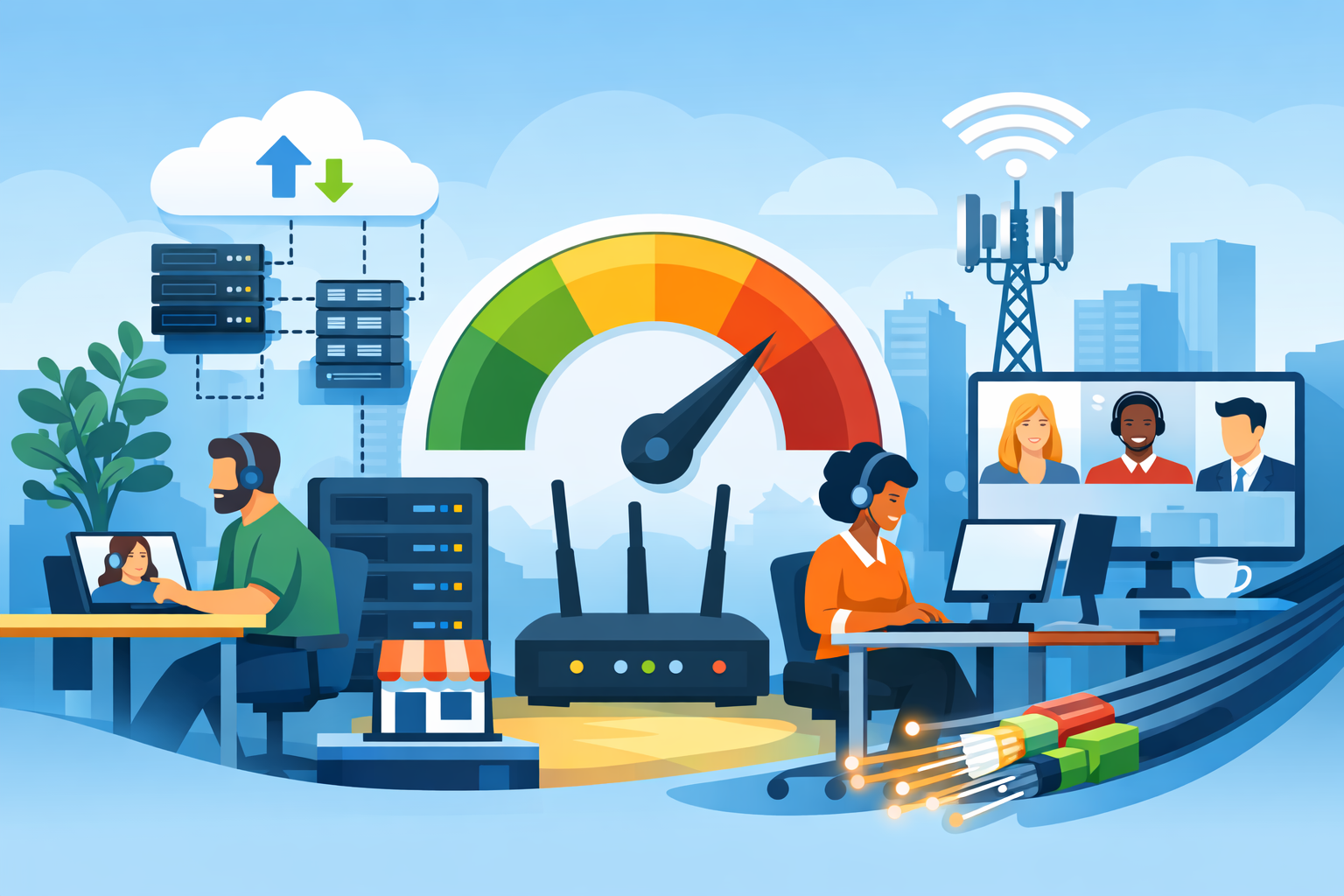
Choosing the right internet speed for your business isn’t just about faster downloads—it’s about keeping operations smooth, customers happy, and teams productive. Whether you’re running a small office, managing a remote team, or scaling a fast-growing company, your internet connection plays a central role in everything you do.
But here’s the challenge: most businesses either overpay for speeds they don’t use or struggle with slow connections that quietly hurt performance. In this guide, we’ll break down exactly what internet speed your business really needs, based on your size, usage, and goals—so you can make a smart, cost-effective decision.
Why Internet Speed Matters for Businesses
A reliable internet connection is no longer optional. It’s the backbone of modern business operations.
From video calls and cloud apps to customer transactions and file transfers, nearly every daily task depends on consistent speed and uptime. When your connection lags, everything else slows down—your team, your service, and ultimately your revenue.
The Real Cost of Slow Internet
Slow internet doesn’t just cause frustration—it impacts your bottom line.
Missed sales opportunities due to lagging checkout systems
Poor video call quality affecting client meetings
Delays in uploading or accessing cloud files
Reduced employee productivity
Over time, these small issues add up. That’s why understanding your speed requirements is critical before choosing a plan.
Understanding Business Internet Speed Basics
Before you decide what speed you need, it helps to understand how internet speed actually works.
Download vs Upload Speed
Most people focus on download speed, but upload speed is just as important for businesses.
Download speed: How fast you receive data (loading websites, streaming videos)
Upload speed: How fast you send data (video calls, file uploads, cloud backups)
For businesses using cloud tools, VoIP systems, or video conferencing, upload speed can be the difference between smooth operations and constant interruptions.
Bandwidth and Simultaneous Users
Bandwidth determines how many users and devices can operate at the same time without slowdowns.
If multiple employees are:
Streaming meetings
Uploading files
Using SaaS platforms
…you’ll need significantly more bandwidth to maintain performance.
Recommended Internet Speeds by Business Size
There’s no one-size-fits-all answer. Your ideal speed depends on how many people use your network and what they’re doing.
Small Businesses (1–5 Employees)
Recommended speed: 50–150 Mbps
This range works well for:
Email and browsing
Light cloud usage
Occasional video calls
If your team uses tools like Google Workspace or Zoom regularly, lean toward the higher end.
Medium Businesses (6–25 Employees)
Recommended speed: 150–500 Mbps
At this level, you’ll likely have:
Frequent video conferencing
Cloud-based software
File sharing across teams
A faster connection ensures everyone can work simultaneously without bottlenecks.
Large Businesses (25+ Employees)
Recommended speed: 500 Mbps to 1 Gbps+
Larger teams require robust connectivity for:
High-volume data transfers
Multiple video streams
CRM and ERP systems
VoIP phone systems
Fiber internet is often the best choice at this scale due to its reliability and symmetrical speeds.
Internet Speed Based on Business Activities
Beyond team size, your daily operations play a major role in determining your needs.
Basic Operations
If your business mainly handles:
Emails
Web browsing
Basic SaaS tools
You can operate efficiently on lower speeds (50–100 Mbps).
Cloud-Based Workflows
Businesses using platforms like:
Google Drive
Dropbox
CRM systems
…should aim for at least 150–300 Mbps to avoid delays and sync issues.
Video Conferencing and VoIP
Video calls require consistent upload and download speeds.
HD video calls: 3–6 Mbps per user
Group meetings: 10+ Mbps per session
Multiply that by the number of simultaneous users to estimate your needs.
E-commerce and High Traffic Websites
If your business relies on online sales or handles customer traffic:
Fast speeds ensure smooth checkout experiences
Prevent downtime during peak traffic
Support real-time inventory updates
A minimum of 300 Mbps is recommended for growing e-commerce businesses.
Fiber vs Cable vs DSL: Which Speed Delivers Best?
Not all internet types perform the same—even at similar speeds.
Fiber Internet
Fastest and most reliable
Symmetrical upload and download speeds
Ideal for growing businesses
Cable Internet
Widely available
Good speeds, but shared bandwidth
Can slow down during peak hours
DSL Internet
Slower but more affordable
Suitable for very small businesses with minimal needs
How to Accurately Measure Your Current Speed
Before upgrading, it’s smart to test your current performance.
You can run a quick check using a reliable speed test tool to see your real-time download and upload speeds.
This helps you:
Identify performance gaps
Confirm if you’re getting what you pay for
Decide whether an upgrade is necessary
Signs Your Business Needs More Speed
Not sure if it’s time to upgrade? Watch for these common signs:
Frequent buffering during meetings
Slow file uploads or downloads
Lag when multiple users are online
Dropped VoIP calls
Delayed access to cloud applications
If these issues sound familiar, your current plan likely isn’t keeping up with your needs.
How to Choose the Right Business Internet Plan
Selecting the right plan goes beyond just speed. You also need reliability, scalability, and support.
Evaluate Your Usage
Start by asking:
How many employees use the internet daily?
What tools and platforms do you rely on?
How much data do you upload and download?
Compare Available Providers
Different providers offer different speeds, pricing, and reliability levels. It’s worth exploring your options through a trusted internet providers to find the best fit for your business.
Check Local Availability
Internet options vary depending on your location. Businesses in different states may have access to different providers, speeds, and infrastructure, which directly affects performance and pricing.
Here are some examples of location-specific broadband options you can explore:
Understanding what’s available in your area helps you make a realistic and informed decision when choosing the right business internet plan.
Balancing Speed and Cost
It’s tempting to choose the fastest plan available, but that’s not always necessary.
Avoid Overpaying
If your business only needs basic connectivity, paying for gigabit speeds won’t provide extra value.
Plan for Growth
At the same time, don’t choose a plan that barely meets your current needs. As your business grows, your internet demands will increase.
A scalable plan ensures you won’t need frequent upgrades.
Future-Proofing Your Business Internet
Technology continues to evolve, and your internet should keep up.
Trends to Consider
Increased reliance on cloud computing
Remote and hybrid work environments
Higher-quality video conferencing
Automation and AI tools
These trends require faster, more stable connections. Investing in the right speed today helps you stay competitive tomorrow.
Final Thoughts
So, what speed does your business really need?
The answer depends on your team size, daily operations, and growth plans. Small teams can function well on modest speeds, while larger or tech-driven businesses need high-performance connections to stay efficient.
The key is to strike the right balance—enough speed to support your operations without overspending. By understanding your usage, testing your current performance, and comparing available options, you can choose a plan that truly fits your business.
Related Posts
 cheap internet offers
Broadband Deals
cheap internet offers
Broadband Deals
How to Decode Your Internet Bill and Spot Hidden Fees
Learn how to read your internet bill, identify hidden fees, challenge unnecessary charges, and lower your monthly internet costs with confidence.
 Broadband Deals
cheap internet deals
Regulations
Broadband Deals
cheap internet deals
Regulations
Early Termination Fees: What You Need to Know First
Learn the true cost of early termination fees, how internet contracts work, ways to avoid penalties, and what to check before signing up.
 Internet Bundles
Best Internet Service Deals and Promotions This Year
Compare the best internet service deals, promotions, gift cards, streaming offers, and bundle discounts from top internet providers to maximize your savings.
 cheap internet offers
The Internet Moving Checklist to Avoid Service Downtime
Use this complete internet moving checklist to avoid downtime, transfer service smoothly, schedule installation early, and stay connected.
 Safety
Best VPNs for Comcast Xfinity: Fast, Private & Reliable
Discover the best VPNs for Comcast Xfinity to improve speed, privacy, and streaming access. Compare top options for secure and reliable internet use.